


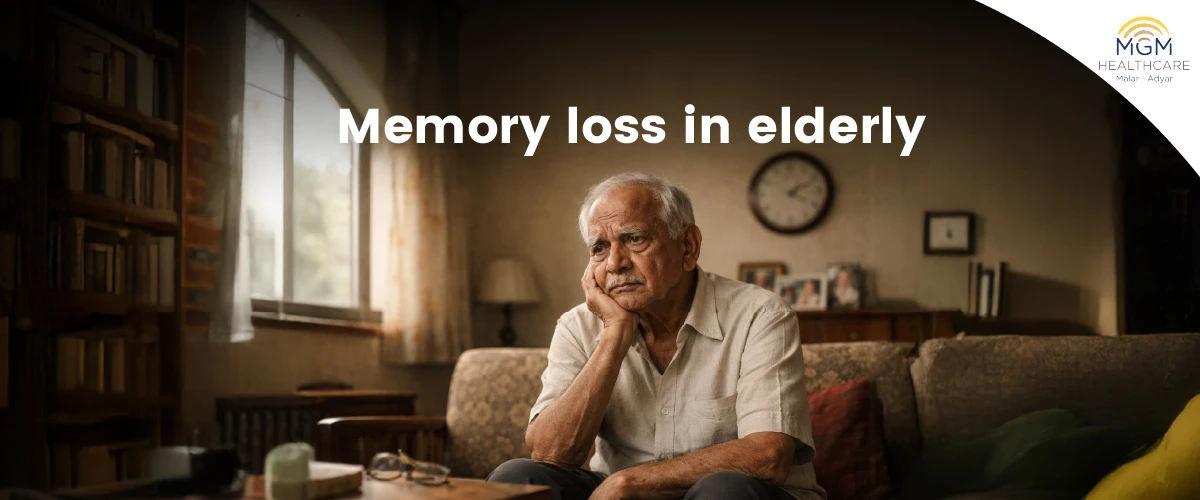
Memory Loss in Elderly: Normal Aging or Something Serious?
Is memory loss a normal part of aging or a sign of something serious?
Many people ignore early symptoms, assuming it’s just age. But in some cases, memory loss can indicate an underlying medical condition that needs attention.
Is Memory Loss in Elderly Normal?
Mild forgetfulness, such as occasionally misplacing items or forgetting names, can be a normal part of aging.
However, frequent memory lapses, confusion, or difficulty performing daily activities are not normal and may require medical evaluation.
What Causes Memory Problems in Elderly?
Memory loss in elderly refers to noticeable decline in recall, thinking ability, or decision making beyond expected age related forgetfulness.
Not all memory problems indicate dementia. Some causes are reversible, while others require long term management.
Understanding the difference is essential.
Types of Memory Problems in Older Adults
- Normal Aging: Mild forgetfulness that does not affect daily functioning.
- Mild Cognitive Impairment (MCI): Memory lapses that don’t interfere heavily with daily life.
- Dementia: Progressive condition affecting memory, behavior, and reasoning.
As Dr. Manicka Saravanan, Senior Geriatrician at MGM Malar, explains:
“Memory loss should never be ignored. Early evaluation helps identify treatable causes and allows families to plan appropriate support.”
What Causes Memory Loss in Elderly?
Memory problems in older adults can occur due to the following medical conditions:
- Most common cause of dementia
- Gradual degeneration of brain cells
- Symptoms include confusion, language difficulty, and impaired reasoning
- Caused by reduced blood flow to the brain
- Often linked to stroke or vessel damage
- Affects memory, focus, and judgment
- Leads to memory problems and nerve symptoms
- More common in elderly with nutritional or absorption issues
- Often reversible with supplementation
- Slows brain function.
- Memory improves with thyroid hormone therapy
5. Depression (Pseudo-Dementia)
- Can mimic dementia symptoms
- Responds well to medical and psychological treatment
6. Drug-Induced Cognitive Impairment
- Caused by sedatives or certain medications
- Often reversible once medications are adjusted
Early Warning Signs to Watch For
- Forgetting recent conversations frequently
- Asking the same questions repeatedly
- Getting lost in familiar places
- Difficulty making decisions
- Withdrawing from social interactions
- Mood or personality changes
How Is Memory Loss Diagnosed?
A structured evaluation helps determine the exact cause.
Diagnostic Process:
- Clinical consultation with a geriatrician
- Cognitive testing such as MMSE or MoCA
- Blood tests including thyroid profile and Vitamin B12
- Brain imaging like MRI or CT scan
- Detailed neuropsychological assessment when needed
At MGM Malar – Adyar, a multidisciplinary team provides comprehensive cognitive evaluation tailored to elderly patients.
Treatment Options for Memory Loss in Elderly
Treatment depends on the underlying cause.
1. Medications
- Donepezil or Rivastigmine for early Alzheimer’s
- Memantine for moderate dementia
- Treatment of coexisting conditions such as diabetes or depression
2. Cognitive Rehabilitation
- Structured memory exercises
- Task organization tools
- Daily routine planning
3. Lifestyle Support
- Antioxidant rich diet
- Regular physical activity
- Social engagement
The National Institute on Aging offers detailed insights into how diet, exercise, and social engagement protect memory and brain function in seniors.
4. Caregiver Support
- Family education
- Emotional counseling
- Long term care planning
When to Consult a Geriatrician or Neurologist
Consult a specialist if:
- Memory problems worsen gradually
- Daily tasks become difficult
- There are neurological symptoms
- There is family history of dementia
Early consultation improves outcomes significantly.
Why Choose MGM Malar – Adyar for Memory Care?
- Experienced Geriatric Medicine specialists
- Advanced diagnostic tools
- Personalized cognitive care programs
- Family centered approach
To schedule a comprehensive memory assessment, contact MGM Malar Hospital, Adyar at 099625 99933.MGM Malar Hospital, Adyar
Key Takeaways
- Memory loss in elderly has multiple causes.
- Not all memory problems mean dementia.
- Some causes are reversible if diagnosed early.
- Structured evaluation helps identify treatable conditions.
- Early intervention improves long term cognitive outcomes.
Conclusion
Memory loss in elderly should never be ignored. While some decline may be age related, progressive forgetfulness or behavioral changes require medical evaluation. With timely diagnosis, appropriate treatment, and caregiver support, many individuals can maintain independence and quality of life.
Frequently Asked Questions (FAQs)
Memory loss in elderly can happen for many reasons. Sometimes it’s due to normal aging, but it can also be caused by conditions like Alzheimer’s disease, poor blood flow to the brain, vitamin deficiencies, thyroid problems, depression, or even certain medications.
The important thing to know is that some causes are completely treatable, while others need long-term care. Identifying the cause early makes a big difference.
Early signs of memory loss often start subtly. You may notice frequent forgetfulness, asking the same questions again, getting confused in familiar places, or struggling to find the right words.
If these changes are happening often or getting worse, it’s best not to ignore them and seek medical advice.
A little forgetfulness can be normal as we age, like occasionally misplacing things or forgetting names.
But memory loss that starts affecting daily life such as getting lost, repeating things often, or struggling with routine tasks is not normal and should be checked by a doctor.
Yes, many memory problems can be treated, especially if they are caused by vitamin deficiencies, thyroid issues, depression, or medication side effects.
Even in conditions like Alzheimer’s, early treatment can help slow down the progression and improve quality of life.
You should see a doctor if memory problems are becoming frequent, getting worse, or starting to affect daily activities.
Signs like confusion, personality changes, or difficulty managing routine tasks are important warning signals that shouldn’t be ignored.
Normal forgetfulness means occasional memory lapses that don’t interfere with daily life.
Dementia is different, it causes ongoing memory decline, confusion, and difficulty performing everyday tasks, and it usually gets worse over time.
Contact Us
Appointments
Emergency
MGM - Malar Adyar
Old No. 52 New No. 111, 1 st Main Road, Gandhi Nagar, Adyar, Chennai – 600020


At MGM Malar - Adyar Hospital, our philosophy centers on alleviating the apprehension associated with illness. Recognizing that confronting health challenges entails both physical and emotional struggles, our devoted team is steadfast in delivering outstanding healthcare to enhance your overall wellness and alleviate the stress that accompanies medical conditions. Situated in the heart of the city with a 141-bed facility, we are dedicated to supporting you throughout your healthcare journey.