


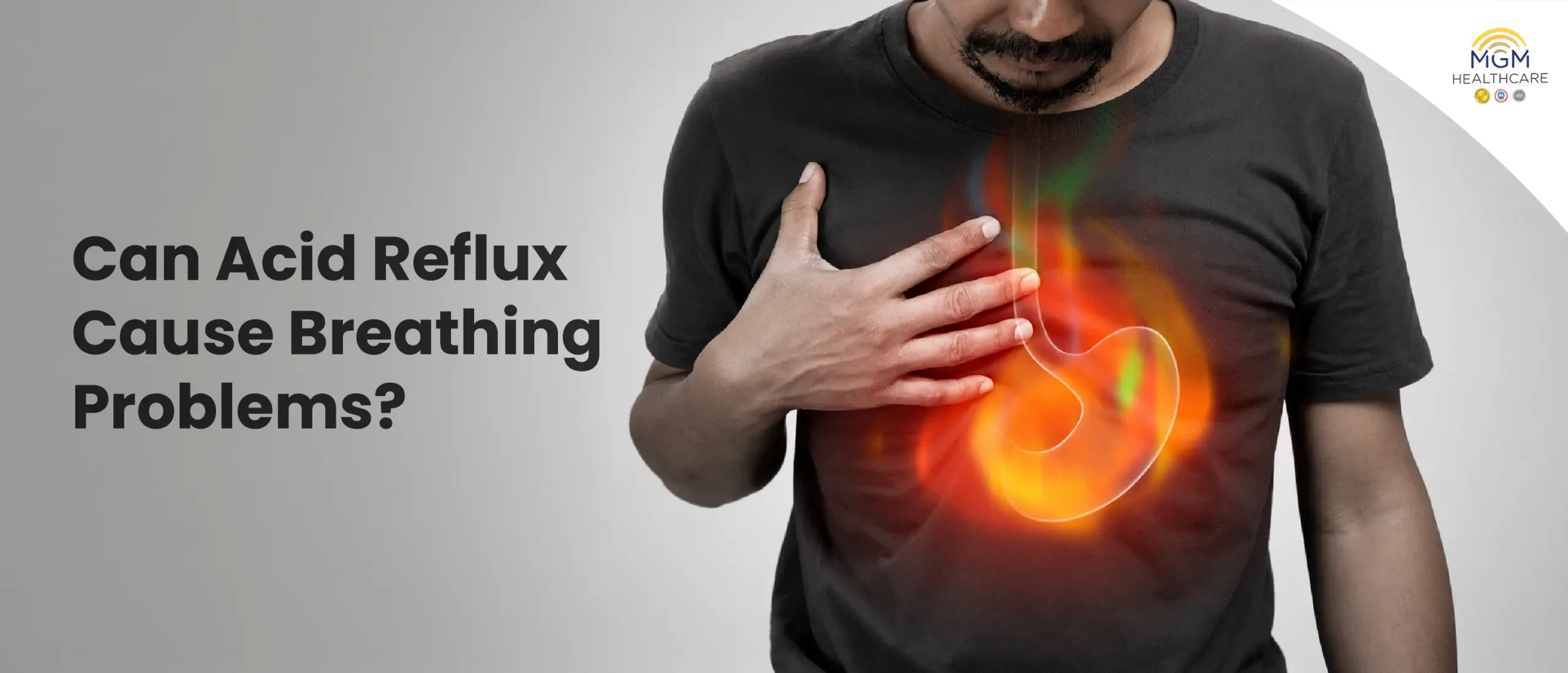
Can Acid Reflux Cause Breathing Problems? What You Should Know
Yes, acid reflux can sometimes cause breathing-related symptoms.
Many people think acid reflux or GERD only causes heartburn, but in some cases it may also lead to coughing, throat irritation, wheezing or a feeling of shortness of breath. This usually happens when stomach acid travels upward and irritates the throat or airways.
Some people may not realize acid reflux could affect breathing until they experience coughing or throat irritation repeatedly, especially at night or after meals.
Because these symptoms can feel similar to asthma or other lung problems, reflux-related breathing issues are sometimes overlooked.
Medically Reviewed By

Senior Consultant Pulmonologist
How Can Acid Reflux Affect Breathing?
Acid reflux happens when stomach acid flows back into the esophagus.
In some people:
- Acid may irritate the throat
- tiny droplets may reach the airways
- inflammation may trigger coughing or breathing discomfort
This is more common in people with chronic acid reflux or GERD (Gastroesophageal Reflux Disease).
People experiencing an ongoing cough or breathlessness should also understand other possible respiratory causes and warning signs.
Helpful Read:
Persistent cough and breathlessness causes & warning signs
Common Breathing Symptoms Linked to Acid Reflux
Some people with reflux may experience:
- chronic cough
- throat irritation
- wheezing
- shortness of breath
- chest discomfort
- worsening asthma symptoms
- frequent throat clearing
Symptoms may feel worse:
- after heavy meals
- at night
- while lying down
Some people may especially notice breathing discomfort worsening during sleep or while lying flat.
Helpful Read:
Breathing problems at night: causes and warning signs
Can Acid Reflux Feel Like Asthma?
Sometimes, yes.
Acid reflux may irritate the airways and trigger symptoms that feel similar to asthma, including:
- coughing
- wheezing
- chest tightness
In some people, reflux may also worsen existing asthma symptoms.
Environmental triggers such as poor air quality may also worsen respiratory irritation and breathing discomfort.
Helpful Read:
How air pollution affects lung health
When Should You See a Doctor?
Consider medical advice if you have:
- frequent heartburn
- breathing discomfort
- chronic cough
- night-time symptoms
- throat irritation that does not improve
- worsening asthma symptoms
Because breathing problems can have many causes, proper evaluation is important.
What May Help Reduce Acid Reflux Symptoms?
Eat Smaller Meals
Large meals may increase reflux symptoms.
Avoid Lying Down After Eating
Try staying upright for at least 2–3 hours after meals.
Limit Trigger Foods
Some people notice worsening symptoms with:
- spicy foods
- fatty meals
- caffeine
- alcohol
Maintain a Healthy Weight
Excess abdominal pressure may worsen reflux.
Elevate Your Head While Sleeping
Sleeping with the head slightly elevated may help reduce nighttime reflux.
Helpful Read :
Chest Pain or Gas? Early Heart Attack Signs You Should Not Ignore
Important Things to Remember
Not all breathing problems are caused by acid reflux.
Conditions such as asthma, allergies or lung disease may also cause similar symptoms. This is why persistent breathing difficulty should always be evaluated properly.
Conclusion
Acid reflux is not always limited to heartburn or digestive discomfort. In some cases, it may also affect the throat and airways, leading to coughing, wheezing or breathing problems.
Recognizing the connection early and managing reflux properly may help improve both digestive comfort and breathing symptoms.
Frequently Asked Questions
Yes. In some people, reflux may irritate the airways and contribute to breathing discomfort.
Yes. Chronic cough and throat irritation are common symptoms linked to GERD.
Lying down may make it easier for stomach acid to move upward into the esophagus.
Yes. Acid reflux may trigger or worsen asthma symptoms in some people.


