




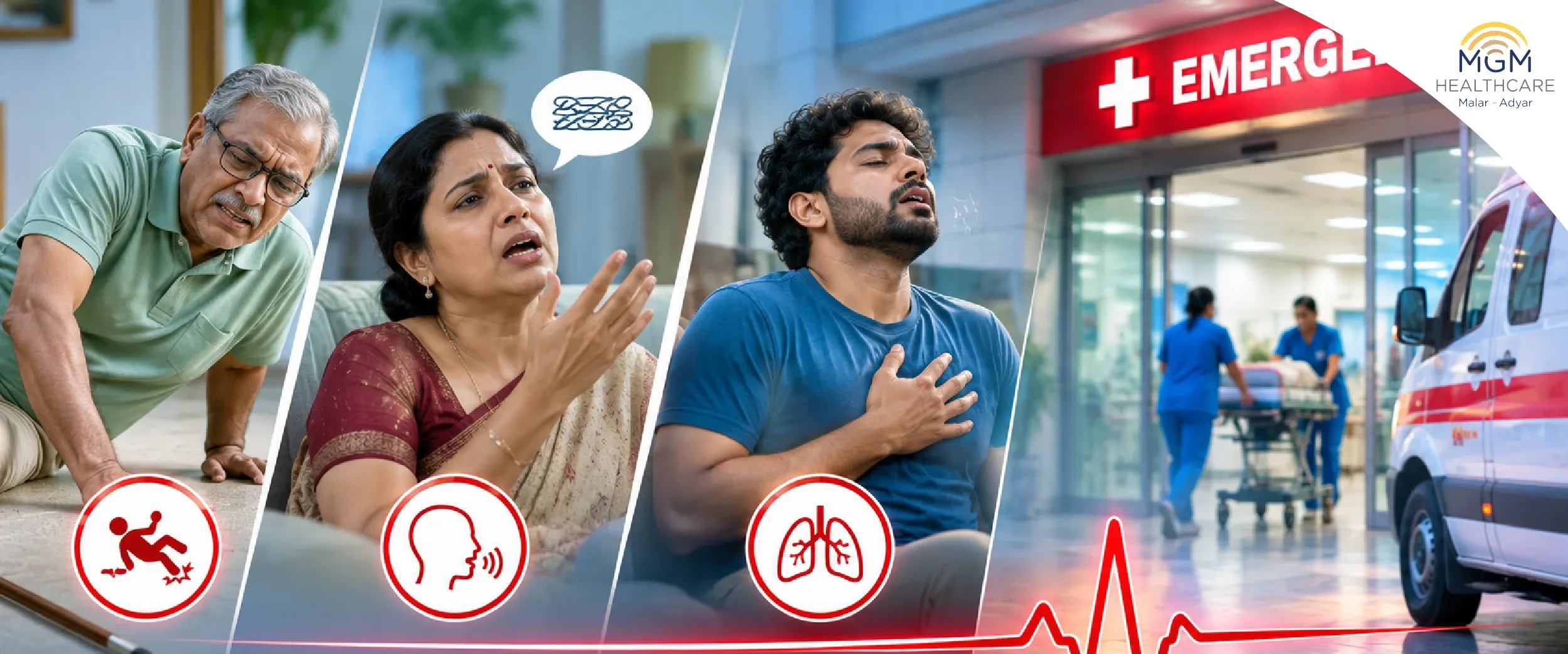
A Sudden Fall, Slurred Speech, or Severe Breathlessness: Would You Know When to Rush to the Emergency?
Fast Facts
- Sudden collapse, slurred speech and severe dyspnea can constitute a medical emergency.
- They could be indicators of a stroke, heart attack, or anything more terrible.
Early medical treatment may prevent life-threatening results.- Do not wait for severe symptoms to go away on their own.
When to Make a Rush to the Emergency Room?
Some symptoms may appear mild at first but may be a sign of something more serious. Catching these warning symptoms and getting immediate treatment can save lives.
When is a sudden drop in temperature serious?
If there is an unexplained fall then immediate action should be taken especially when it is accompanied by:
- Feeling faint or unsteady.
- Severe dizziness / disorientation.
- Weakness of one side of the body.
- Head injury followed by vomiting or being drowsy.
These could be signs of a stroke or serious injury to the brain or some other medical emergency.
Slurred Speech: Is It a Stroke?
A sudden problem with speaking is a crucial warning symptom of stroke.
Remember GET FAST:
- B: Balance issues.
- E: Sudden eyesight loss.
- F: Paralysis of the face.
- A: weakening of the arm.
- S: Speech slurred.
- T: Time to summon the emergency services.
Go to the ER immediately, even if the symptoms subside.
When should you worry about serious shortness of breath?
Any sudden or severe breathing difficulty requires urgent care, especially when linked with:
- Tightness or ache in the chest.
- Lips that are blue or gray.
- Fainting or dizziness.
- Trouble with creating whole sentences.
These symptoms could be signs of a heart attack, a serious asthma attack or a blood clot in the lungs.
Other Warning Signs You Should Not Ignore
Get emergency attention for:
- Chest discomfort, severe.
- Loss of consciousness (sudden).
- Uncontrollable hemorrhage.
- A really terrible headache that starts unexpectedly.
- Seizures lasting longer than 5 minutes.
- Swelling of the throat that blocks the airways.
What Should You Do in an Emergency
- Call for an ambulance right away.
- Remain calm and discuss your symptoms in detail.
- Record the onset of symptoms.
- Do not give them food, water or medication unless medically advised.
- Obey the emergency dispatcher’s directions.
- Do not drive yourself to the hospital with a suspected stroke or heart attack.
Why does emergency care need to be fast?
Delaying therapy can increase chances of permanent disability, organ damage and other severe problems. Seeing a doctor sooner can help them figure out what’s wrong and get the right treatment started right away. Seek emergency attention when in doubt
Do not neglect sudden loss of balance, slurred speech, or difficulty in breathing.
The Emergency Medicine team at MGM Healthcare provides rapid assessment and management of patients with medical emergencies.
Remember. Watch for the indications. Do it fast. Every minute counts.
Frequently Asked Questions
If you become unconscious or confused or have a strong headache, weakness or major head injury from the fall, get quick care.
Not always yet it is a crucial warning flag. If speech goes back to normal, go to the emergency room right away.
Immediate medical assistance is needed if you have sudden or severe dyspnea especially with chest pain, fainting or difficulty speaking.
Stay with the patient and note the time symptoms began. Do not give food or water and follow the emergency dispatcher’s instructions.
If treated promptly the risk of serious complications, long term disability and life threatening consequences can be lessened.
Contact Us
Appointments
Emergency
MGM - Malar Adyar
Old No. 52 New No. 111, 1 st Main Road, Gandhi Nagar, Adyar, Chennai – 600020


At MGM Malar - Adyar Hospital, our philosophy centers on alleviating the apprehension associated with illness. Recognizing that confronting health challenges entails both physical and emotional struggles, our devoted team is steadfast in delivering outstanding healthcare to enhance your overall wellness and alleviate the stress that accompanies medical conditions. Situated in the heart of the city with a 141-bed facility, we are dedicated to supporting you throughout your healthcare journey.
© 2026 MGM Malar - Adyar. All Rights Reserved.
Part of MGM HEALTHCARE PRIVATE LIMITED