


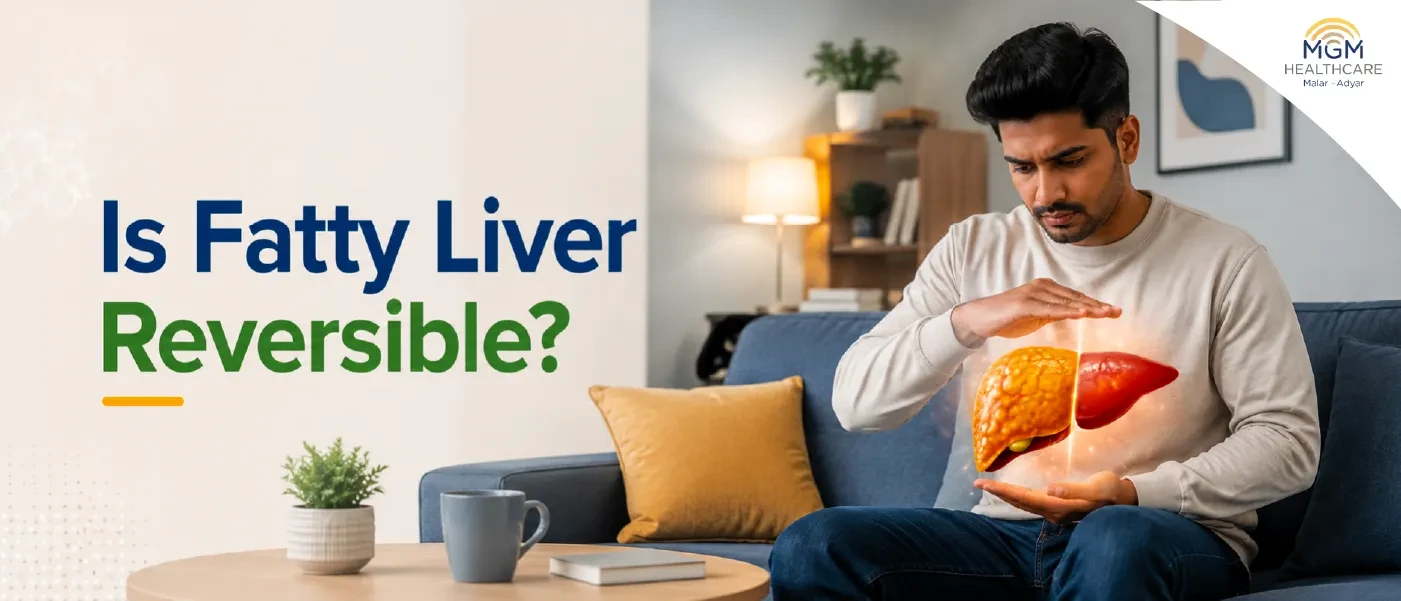
Is Fatty Liver Reversible? Symptoms, Stages & Treatment
Quick Facts
- Fatty liver develops when excess fat collects inside the liver.
- Early-stage fatty liver may improve with healthy lifestyle changes.
- Many people with fatty liver do not notice symptoms in the early stages.
- Losing excess weight, eating a balanced diet, and staying active can support liver health.
- Identifying the condition early can help lower the risk of long-term liver damage.
Introduction
You may have been told during a routine health check-up that you have a fatty liver, even though you feel completely well. This is quite common because fatty liver often develops silently without causing noticeable symptoms.
The encouraging news is that many people can improve their liver health through healthy lifestyle changes, especially when the condition is recognised early. Understanding the symptoms, causes, and treatment options can help you take the right steps to protect your liver.
Can Fatty Liver Be Reversed?
Yes, in many cases it can.
If fatty liver is recognised in its early stages, reducing excess body weight, eating healthier foods, exercising regularly, and managing conditions like diabetes or high cholesterol may help reduce fat stored in the liver.
However, if the disease progresses to advanced scarring (cirrhosis), the damage may not be completely reversible. Seeking medical advice early offers the best chance of protecting your liver.
What Is Fatty Liver?
Fatty liver develops when excess fat collects inside the liver.
A small amount of fat in the liver is normal, but too much fat can affect how the liver works over time.
There are two common types:
- Non-alcoholic fatty liver disease (NAFLD): Commonly linked to obesity, diabetes, high cholesterol, or metabolic syndrome.
- Alcohol-related fatty liver disease: Caused by excessive alcohol consumption.
Without proper care, either condition may progress and lead to liver damage.
What Are the Symptoms of Fatty Liver?
Many people do not experience symptoms during the early stages.
As the condition progresses, some people may notice:
- Feeling tired more often than usual
- A dull ache or discomfort below the right side of the ribs
- General weakness
- Difficulty concentrating
- Unexplained weight loss in advanced stages
If these symptoms continue or become worse, consult a healthcare professional.
What Causes Fatty Liver?
Fatty liver can develop due to several health and lifestyle factors, including:
- Being overweight or obese
- Type 2 diabetes
- High cholesterol or triglycerides
- Eating too many processed or sugary foods
- Drinking excessive alcohol
- A sedentary lifestyle
Having one or more of these risk factors does not necessarily mean you will develop fatty liver, but it can increase your chances.
What Are the Stages of Fatty Liver?
Fatty liver usually develops gradually.
Stage 1 – Simple Fatty Liver
Fat begins to accumulate inside the liver with little or no inflammation.
Stage 2 – Fatty Liver with Inflammation
Inflammation develops and may start affecting liver cells.
Stage 3 – Fibrosis
Repeated inflammation causes scar tissue to form in the liver.
Stage 4 – Cirrhosis
Extensive scarring affects liver function and requires ongoing medical care.
How Is Fatty Liver Treated?
The treatment approach depends on the stage of the disease and your overall health.
Your doctor may recommend:
- Gradual weight loss
- Regular physical activity
- A balanced, nutritious diet
- Managing diabetes and cholesterol levels
- Avoiding alcohol if advised
- Routine follow-up appointments
Many people notice improvements when these changes become part of their daily routine.
What Foods Are Good for Fatty Liver?
Eating a healthy diet can help support liver function.
Choose more:
- Fresh fruits and vegetables
- Whole grains
- Fish and lean meats
- Nuts and seeds in moderation
- Healthy fats such as olive oil
Limit:
- Sugary drinks
- Fried foods
- Highly processed snacks
- Excess alcohol
- Foods high in saturated fat
When Should You See a Doctor?
Arrange a medical evaluation if you:
- Feel tired most of the time
- Have discomfort in the upper right side of your abdomen
- Have diabetes, obesity, or high cholesterol
- Receive abnormal liver function test results
- Have been diagnosed with fatty liver during a health screening
Prompt medical advice can help slow disease progression and support better liver health.
Key Takeaways
- Early-stage fatty liver may improve with healthy lifestyle changes.
- Healthy eating, regular exercise, and weight management are key parts of treatment.
- Many people have no symptoms, making routine health check-ups important.
- Persistent tiredness or abdominal discomfort should not be ignored.
- Early care can help protect your liver and reduce the risk of complications.
Medically Reviewed by
35+ Years of Experience
MBBS & MD (General Medicine) Senior Consultant
MGM Malar Hospital in Adyar, Chennai.
Conclusion
Fatty liver is a common condition that deserves timely attention.
With healthy lifestyle changes and regular medical follow-up, many people can improve their liver health and lower the risk of future complications.
If you have been diagnosed with fatty liver or have risk factors such as obesity, diabetes, or high cholesterol, speaking with your doctor is the best way to understand your condition and receive personalised advice.
Frequently Asked Questions
Yes. Early-stage fatty liver may improve with healthy eating, regular exercise, weight management, and treatment of underlying health conditions.
Many people have no symptoms. Others may experience tiredness or mild discomfort in the upper right side of the abdomen.
The time varies for each person. Improvements may be seen within a few months when healthy lifestyle changes are followed consistently.
Yes. Regular exercise supports weight management, reduces fat in the liver, and improves overall liver health.
It can become serious if left untreated. Early diagnosis and healthy lifestyle changes can help reduce the risk of liver damage.
Contact Us
Appointments
Emergency
MGM - Malar Adyar
Old No. 52 New No. 111, 1 st Main Road, Gandhi Nagar, Adyar, Chennai – 600020


At MGM Malar - Adyar Hospital, our philosophy centers on alleviating the apprehension associated with illness. Recognizing that confronting health challenges entails both physical and emotional struggles, our devoted team is steadfast in delivering outstanding healthcare to enhance your overall wellness and alleviate the stress that accompanies medical conditions. Situated in the heart of the city with a 141-bed facility, we are dedicated to supporting you throughout your healthcare journey.
© 2026 MGM Malar - Adyar. All Rights Reserved.
Part of MGM HEALTHCARE PRIVATE LIMITED