




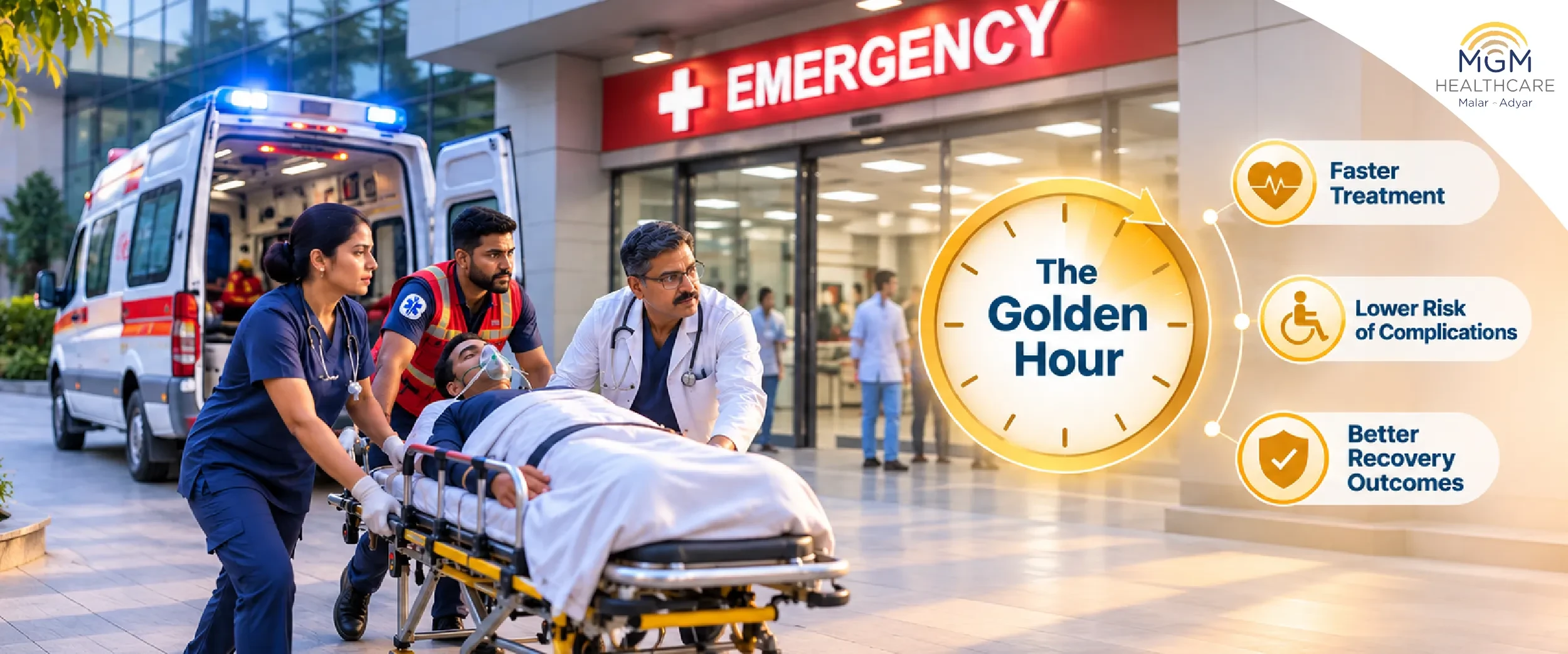
Why Does the Golden Hour Matters in Emergency Care?
Fast Facts
- The Golden Hour is all about the need of receiving quick medical care after a severe injury.
- Early treatment is important because the sooner the recovery, the better, and the lesser the danger of complications.
- Medical crises like heart attack, stroke, cardiac arrest and serious injuries require immediate medical attention.
- The Golden Hour is generally not 60 minutes. How urgently you need therapy depends on your situation.
- Early recognition of indications and early treatment can save lives.
What is the Golden Hour in Emergency Medicine?
The Golden Hour is an important period of time in which the patient is critically injured or in serious medical distress and rapid assessment and treatment can often improve the patient’s outcome. It is often related with trauma care and emphasizes the significance of swift medical action.
During this time healthcare personnel will look to uncover life-threatening conditions, stabilize the patient and provide the right therapy. It’s not a rigorous 60-minute deadline, but the premise is the same: early treatment can make a big impact.
The Importance of the Golden Hour
If a patient’s condition is left untreated it can get worse yet early emergency care can boost chances of recovery.
Increases Chance Of Survival
Fast treatment for heavy bleeding, cardiac arrest or catastrophic injuries can save lives.
Reduces Complications
Starting treatment early can prevent further damage to important organs and lessen the chance of significant complications.
Conserves Vital Organs
The brain and the heart always require oxygenated blood. If treatment of breathing difficulties or restoration of blood flow is delayed, significant injury may result.
Recovery from AIDS
Timely treatment may prevent problems, aid recovery and enhance long-term outcomes.
Helps you treat faster
Early assessment of an issue allows the medical team to diagnose the problem, do the necessary tests and start the appropriate management without unnecessary delay.
Medical Emergencies – Every Minute Counts
Some medical situations demand quick treatment, otherwise catastrophic problems can occur.
Heart Attack
Timely therapy can restore blood flow to the heart muscle and limit damage.
Stroke
Doctors are able to make an early assessment and choose the proper treatment to restore blood flow or control bleeding in the brain.
Serious injuries and traffic accidents
Immediate treatment of serious bleeding, breathing difficulties and other traumatic injuries can help prevent further decline.
Heart Attack
The performance of immediate cardiopulmonary resuscitation (CPR) and, if possible, the use of an automated external defibrillator (AED) can improve the odds of survival.
Trouble Breathing (Severe)
Getting medical care promptly can help prevent dangerously low levels of oxygen and respiratory failure.
Severe Allergic Reactions
This is a serious allergic reaction and needs immediate treatment with adrenaline (epinephrine) if needed.
What Happens During the Golden Hour?
Scenario teams must decide on treatment priorities according to the patient’s status and the severity of the circumstance.
Quick check
Doctors and emergency personnel assess breathing, circulation and consciousness and vital signs for life threatening problems.
Stabilization
Treatment may include halting the bleeding, helping the person breathe, delivering oxygen, or CPR.
Tests for Diagnosis
Depending on the conditions, doctors may order blood tests, X-rays, an ECG or other diagnostics.
Emergency Treatment
You might need medicines, emergency surgery, blood flow procedures or professional care.
Continuous surveillance
The medical team monitors the patient’s response to treatment and adjusts care as needed.
Symptoms Requiring Urgent Medical Care
If you can recognize emergency signs early, you can give them care early.
- Severe or sudden chest pain or discomfort.
- Sudden weakness or numbness, especially on one side of the body.
- Sudden difficulty speaking, drooping face or lack of balance.
- Serious respiratory problems.
- Heavy or prolonged bleeding.
- Unconsciousness or unresponsiveness.
- A severe, unusual headache or a sudden confusion.
If you see any of these signs, call emergency services immediately.
How Can You Help In A Medical Emergency?
Taking the right move before expert help arrives can make a difference.
- Follow directions of the emergency operator.
- If someone is unconscious and not breathing regularly, call for help, start CPR and use an AED if one is accessible.
- Apply direct, forceful pressure to the site to control extreme bleeding, if safe to do so.
- Don’t move unless necessary: If there is no immediate danger, or if moving is necessary to offer life-saving care, do not move someone with a suspected spinal or major traumatic injury.
- Don’t self-diagnose: Never postpone medical attention from a professional in the hope that a home remedy would cure the illness.
Is the Golden Hour always 60 minutes?
Don’t. The Golden Hour is a guideline, not an absolute medical time limit. The patient’s health, severity of the emergency, and the type of emergency all determine the urgency of care.
Different treatment windows exist for different conditions but cardiac arrest, for example, needs attention within minutes. There’s no wait period, no certain length of time, the important thing is to get the medical attention immediately.
When to Seek Emergency Care?
Call for emergency medical help immediately if you suffer severe chest discomfort, sudden shortness of breath, symptoms of a stroke, excessive bleeding, loss of consciousness or any other symptoms of a life-threatening condition.
Don’t try to treat a critical emergency at home or wait for a normal visit. Appropriate emergency care facilities require prompt assessment.
Value every second
The Golden Hour stresses the need of identifying emergencies and seeking medical assistance straight away. It doesn’t matter if the reason is a heart attack, stroke, vehicle accident or catastrophic injury, timely treatment can save lives and reduce the risk of long-term issues.
In an emergency, an immediate response can save lives.
Frequently Asked Questions
The ‘Golden Hour’ is the provision of early medical assessment and treatment to improve outcomes following a severe accident or emergency.
Early intervention can help treat potentially deadly conditions, prevent further damage, reduce complications and improve survival rates.
There is no hard deadline. Some emergencies call for fast action in minutes, others care at different speeds.
Heart attack, Stroke ,Cardiac arrest ,Serious injuries ,Uncontrollable bleeding or Serious breathing issues need urgent medical care.
Call emergency services, following the operator’s directions and give the correct first aid if it is safe to do so. Emergency help in India: 112
Yes.Prognosis depends on the severity of the disease, timely and adequate treatment can improve the prognosis and reduce the risk of complications.
Contact Us
Appointments
Emergency
MGM - Malar Adyar
Old No. 52 New No. 111, 1 st Main Road, Gandhi Nagar, Adyar, Chennai – 600020


At MGM Malar - Adyar Hospital, our philosophy centers on alleviating the apprehension associated with illness. Recognizing that confronting health challenges entails both physical and emotional struggles, our devoted team is steadfast in delivering outstanding healthcare to enhance your overall wellness and alleviate the stress that accompanies medical conditions. Situated in the heart of the city with a 141-bed facility, we are dedicated to supporting you throughout your healthcare journey.
© 2026 MGM Malar - Adyar. All Rights Reserved.
Part of MGM HEALTHCARE PRIVATE LIMITED