


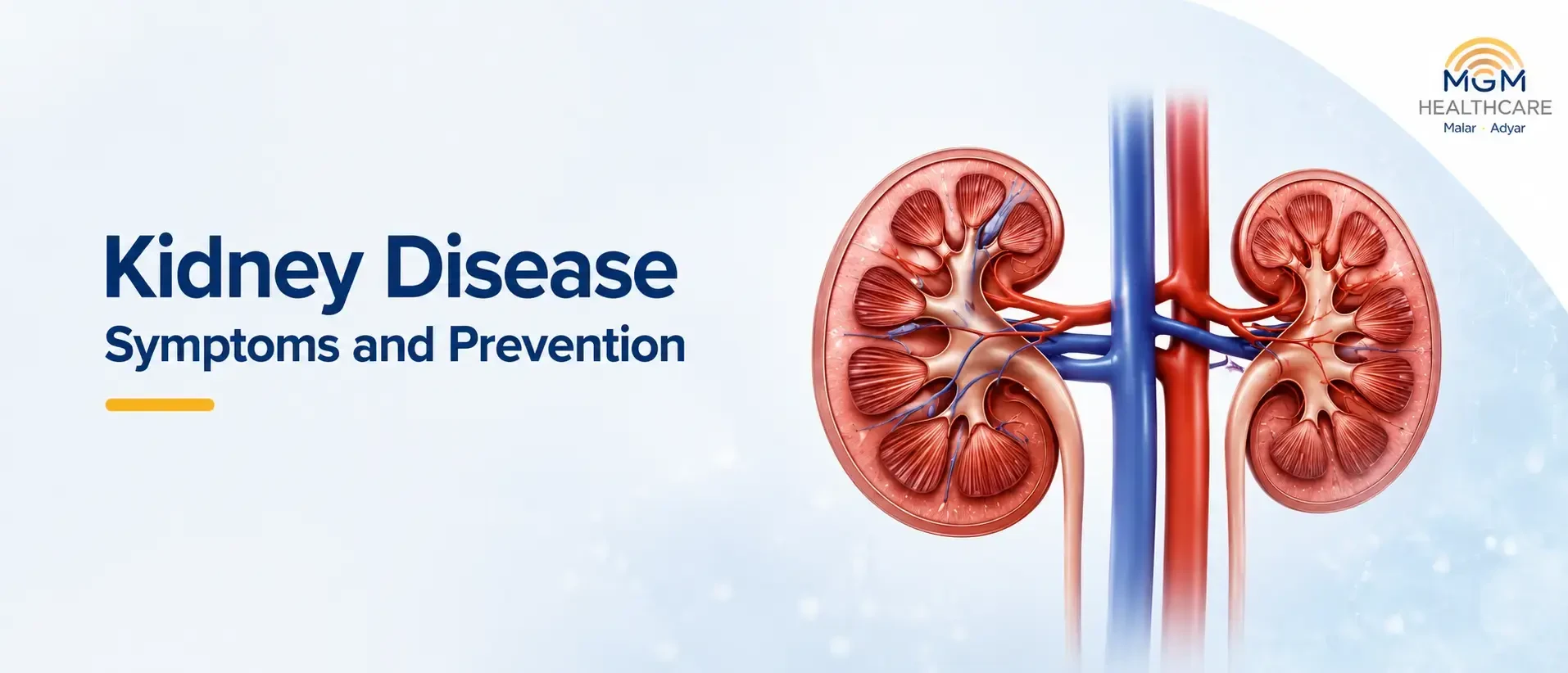
Kidney Disease Symptoms and Prevention
Quick Answer
Kidney disease develops silently for years before it causes noticeable symptoms. Early signs include fatigue, swelling in the feet and ankles, foamy urine, changes in how often you urinate, and itchy skin. The two biggest causes are uncontrolled diabetes and high blood pressure. Kidney disease cannot always be reversed, but it can almost always be slowed or stopped from progressing if it is caught early through simple blood and urine tests. The most effective prevention steps are controlling blood sugar and blood pressure, staying hydrated, limiting salt and painkiller overuse, maintaining a healthy weight, and getting an annual kidney function check – especially if you’re over 40 or have a family history of kidney problems. If you notice two or more of the warning signs below, don’t wait. Book a kidney health screening with the nephrology team at MGM Malar and get a clear answer in a single visit.
What Is Kidney Disease? (Definition)
Kidney disease means your kidneys – two fist-sized, bean-shaped organs sitting just below your rib cage – have been damaged and can no longer filter waste, toxins, and extra fluid out of your blood the way they should. Healthy kidneys quietly do this job around the clock, while also regulating blood pressure, balancing minerals like potassium and phosphorus, triggering red blood cell production, and keeping your bones strong.
When kidney disease is short-lived and reversible, it’s called acute kidney injury. When the damage lasts more than three months and tends to worsen over time, it’s classified as chronic kidney disease (CKD) – the form most people mean when they talk about “kidney disease.”
How Common Is Kidney Disease?
Kidney disease is far more widespread than most people assume. Roughly one in seven adults lives with some degree of chronic kidney disease, and a large share of them are completely unaware of it because the early stages rarely produce symptoms. Globally, diabetes and high blood pressure together are responsible for the majority of new cases each year, which is why anyone managing either condition should treat kidney screening as a routine part of care, not an optional extra.
What Are the Early Symptoms of Kidney Disease?
In the earliest stages (Stage 1-2), kidney disease usually causes no symptoms at all. Warning signs typically only appear once kidney function has dropped significantly, which is why blood and urine tests – not how you feel – are the real early-warning system.
Early and easy-to-miss signs
- Feeling unusually tired or low on energy, even after resting
- Trouble concentrating or a foggy feeling in the head
- Mild swelling around the eyes, especially in the morning
- Needing to urinate more frequently, particularly at night
- Foamy, frothy, or bubbly urine (a sign of protein leaking into urine)
- Dry, itchy skin that doesn’t improve with moisturizer
- Muscle cramps, especially in the legs
Symptoms of advanced kidney disease
- Swelling in the feet, ankles, hands, or around the eyes
- Persistent nausea, vomiting, or loss of appetite
- Shortness of breath (from fluid building up around the lungs)
- Blood pressure that becomes difficult to control with medication
- Darkening or discoloration of the skin
- Numbness or tingling in the hands or feet
- Difficulty sleeping
None of these symptoms are unique to kidney disease – several can point to other conditions entirely. That’s exactly why self-diagnosis is unreliable. If two or more of these signs show up together and stick around, a simple kidney function panel is the fastest way to get a real answer.
What Causes Kidney Disease?
Chronic kidney disease rarely has a single cause – it usually develops from one or more ongoing conditions that gradually damage the tiny filtering units inside the kidneys, called nephrons.
The two leading causes
- Diabetes (Type 1 and Type 2) – High blood sugar over many years damages the small blood vessels inside the kidneys, reducing their filtering ability. This is the single most common cause of kidney disease worldwide.
- High blood pressure (hypertension) – Constant high pressure wears down the blood vessels feeding the kidneys. Kidney damage and high blood pressure often feed each other in a cycle: damaged kidneys struggle to regulate fluid and salt, which pushes blood pressure even higher.
Other contributing causes
- Glomerulonephritis (inflammation of the kidney’s filtering units)
- Polycystic kidney disease and other inherited kidney disorders
- Autoimmune conditions such as lupus, sarcoidosis, or Sjögren’s syndrome
- Recurrent kidney infections or urinary tract obstructions (enlarged prostate, kidney stones, tumors)
- Vesicoureteral reflux (urine flowing backward toward the kidneys)
- Long-term, heavy use of certain painkillers (especially NSAIDs) or other kidney-affecting medications
What Are the 5 Stages of Kidney Disease?
Doctors stage kidney disease using a blood test called the estimated Glomerular Filtration Rate (eGFR), which measures how many milliliters of blood your kidneys filter per minute. A lower number means weaker kidney function.
| Stage | eGFR (mL/min) | What It Means |
| Stage 1 | 90 or above | Kidneys work normally; mild damage may be present |
| Stage 2 | 60–89 | Mild loss of kidney function |
| Stage 3a | 45–59 | Mild to moderate loss; symptoms may begin appearing |
| Stage 3b | 30–44 | Moderate to severe loss of function |
| Stage 4 | 15–29 | Severe loss of kidney function |
| Stage 5 | Below 15 | Kidney failure; dialysis or transplant usually needed |
Stages 1-3 are the window where lifestyle changes and medication can meaningfully slow or even halt progression. Once someone reaches Stage 4 or 5, the focus shifts to managing complications and planning for dialysis or a transplant. This is exactly why early testing matters more than waiting for symptoms.
How Is Kidney Disease Diagnosed?
Diagnosis is usually quick and non-invasive, involving:
- Blood test (eGFR and serum creatinine): Measures how efficiently your kidneys filter waste
- Urine test (urine albumin-to-creatinine ratio): Checks for protein or blood that shouldn’t normally be there
- Blood pressure check: High blood pressure is both a cause and an early clue
- Imaging (ultrasound, CT, or MRI): Assesses kidney size, structure, cysts, or blockages
- Kidney biopsy (in select cases): A small tissue sample helps pinpoint the exact type of kidney disease
How Can You Prevent Kidney Disease?
The encouraging news is that most kidney disease risk factors are within your control. Here’s a practical, doctor-backed prevention checklist:
- Control blood sugar if you have diabetes or prediabetes – this is the single biggest protective step.
- Keep blood pressure in a healthy range, ideally with regular home monitoring.
- Cut back on salt to ease the workload on your kidneys and help manage blood pressure.
- Stay hydrated, but don’t overcorrect – moderate, consistent water intake is what matters, not extreme volumes.
- Use painkillers responsibly. Avoid long-term, high-dose use of over-the-counter NSAIDs like ibuprofen without medical guidance.
- Maintain a healthy weight through regular physical activity – aim for at least 30 minutes of movement, five days a week.
- Quit smoking, since tobacco use accelerates kidney damage and reduces blood flow to the kidneys.
- Limit alcohol intake to moderate levels.
- Get an annual kidney screening if you’re over 40, diabetic, hypertensive, or have a family history of kidney disease.
- Don’t skip your check-ups – kidney disease found in Stage 1 or 2 is far easier to manage than disease found at Stage 4.
Kidney Disease vs. Normal Aging: How to Tell the Difference
It’s common to dismiss tiredness, occasional swelling, or needing to urinate more often as “just getting older.” Here’s a simple way to compare the two:
| Symptom | Normal Aging | Possible Kidney Disease |
| Tiredness | Improves with rest | Persists despite adequate sleep |
| Swelling | Occasional, after long travel | Regular swelling in feet/ankles/eyes |
| Urination | Minor changes with age | Sudden increase, foamy or bubbly urine |
| Blood pressure | Stable with medication | Increasingly hard to control |
| Skin | General dryness | Persistent itching plus darkening of skin |
If your symptoms sit in the second column, it’s worth getting a kidney panel rather than assuming it’s age-related.
When Should You See a Doctor?
Book an appointment promptly if you notice:
- Ongoing fatigue that doesn’t improve with rest
- Swelling in your feet, ankles, hands, or around your eyes
- Foamy or bubbly urine, or urinating far more or less than usual
- Blood pressure that’s suddenly harder to control
- Persistent nausea, loss of appetite, or trouble concentrating
If you already manage diabetes, high blood pressure, or heart disease, a kidney function test every 6–12 months is recommended even without symptoms – early-stage kidney disease is detected through lab work, not how you feel.
Get Screened at MGM Malar
Kidney disease is one of the few serious conditions that can be caught early with just a blood test and a urine test – both available in a single visit. The nephrology and internal medicine team at MGM Malar offers comprehensive kidney health screening, eGFR and creatinine testing, ultrasound imaging, and personalized management plans for diabetes- and hypertension-related kidney risk.
If you’re over 40, diabetic, hypertensive, or have a family history of kidney disease, don’t wait for symptoms to show up. Schedule a kidney health check-up at MGM Malar today and get clarity on your kidney health in one visit.
Medically Reviewed by
25+ Years of Experience
MBBS, MD (Pediatrics), DM Senior Consultant Nephrology
MGM Malar Hospital, Chennai.
Frequently Asked Questions
No, chronic kidney disease currently has no cure, but its progression can be significantly slowed – and in many people, stopped – through blood sugar and blood pressure control, dietary changes, and medication. Early-stage CKD managed well often never advances to kidney failure.
There often isn’t a noticeable first sign – early kidney disease is typically silent. When symptoms do appear first, they’re commonly mild fatigue, slightly foamy urine, or needing to urinate more frequently, especially at night.
Adequate hydration supports normal kidney function, but drinking excessive amounts of water does not prevent or reverse kidney disease. Consistent, moderate water intake alongside blood pressure and blood sugar control offers far more protection.
Yes, it can run in families. Both inherited kidney conditions (like polycystic kidney disease) and shared risk factors (like diabetes and high blood pressure) mean family history raises your personal risk.
For someone with healthy kidneys, no food needs to be avoided outright. For those already diagnosed with CKD, doctors often recommend limiting sodium, potassium-rich foods (bananas, oranges, potatoes), phosphorus-heavy foods (dairy, beans), and excess protein, based on individual test results.
Contact Us
Appointments
Emergency
MGM - Malar Adyar
Old No. 52 New No. 111, 1 st Main Road, Gandhi Nagar, Adyar, Chennai – 600020


At MGM Malar - Adyar Hospital, our philosophy centers on alleviating the apprehension associated with illness. Recognizing that confronting health challenges entails both physical and emotional struggles, our devoted team is steadfast in delivering outstanding healthcare to enhance your overall wellness and alleviate the stress that accompanies medical conditions. Situated in the heart of the city with a 141-bed facility, we are dedicated to supporting you throughout your healthcare journey.
© 2026 MGM Malar - Adyar. All Rights Reserved.
Part of MGM HEALTHCARE PRIVATE LIMITED