


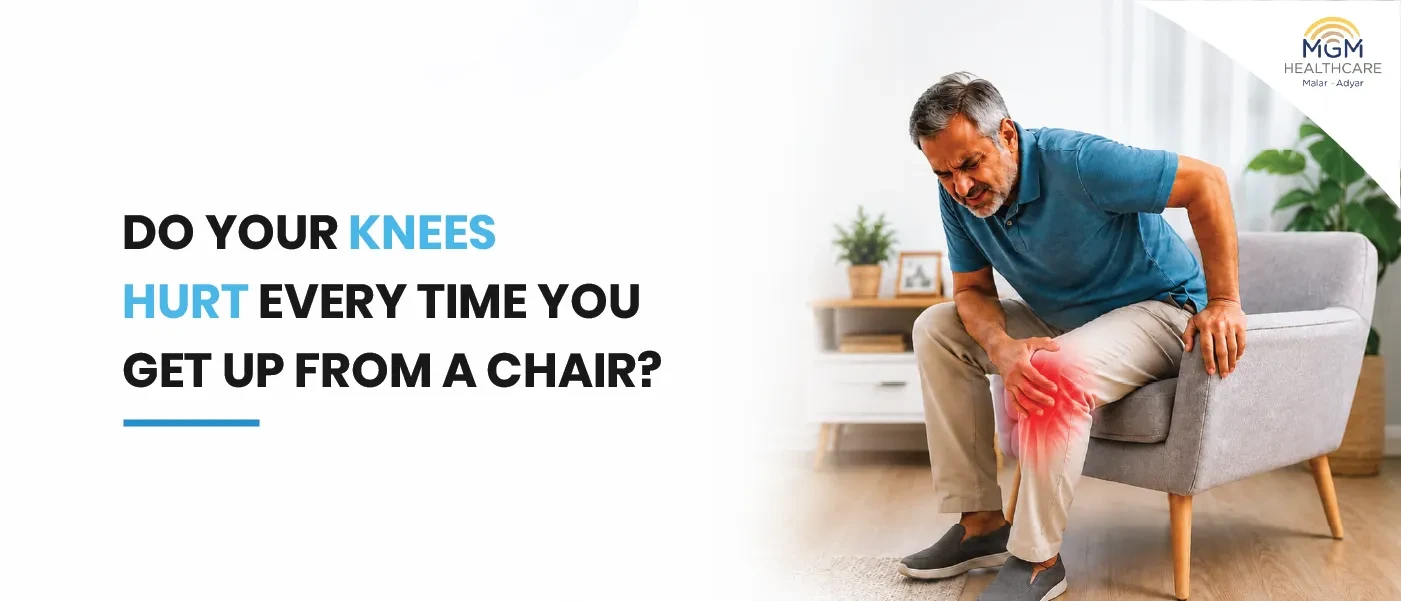
Do Your Knees Hurt Every Time You Get Up from a Chair?
Fast Facts
- There are many causes of knee pain when you stand up from a sitting position.
- Osteoarthritis is a common factor, especially as you become older.
- Muscle weakness, troubles with tendons, a previous injury, or other problems with the knee can also cause discomfort.
- If you have ongoing pain, swelling, stiffness, or problems doing daily duties, get it checked out.
- Maintaining a normal weight and strengthening the muscles surrounding the knee may increase joint health.
- Urgent medical review may be needed if there is severe pain, significant swelling, inability to bear weight, or a visible lesion.
Introduction
Does your knee hurt when you get up from a sitting position?
You may feel it most when you stand up after sitting for a long time, climb stairs, or start to walk.
If you have knee pain that continues during your daily activities and is accompanied by occasional stiffness, you shouldn’t accept it as a normal part of aging.
Why do my knees ache when I get up?
Knee Osteoarthritis
Knee pain, stiffness, and limited range of motion can be caused by osteoarthritis. Symptoms can be more noticeable after periods of rest or with activities that put additional stress on the joint.
Muscle Weakness
Decreased strength of the muscles around the hip and knee may change the way in which stressors are distributed across the joint.
“Properly recommended strengthening workouts can improve functionality.
Tendon Problems
Pain may be due to irritation or overstressing of tendons around the knee when standing, climbing stairs, or squatting.
History of Trauma
Injuries to aged ligaments, meniscus, or other injuries may cause discomfort or increase the probability of developing joint difficulties later on.
Excess Body Weight
The presence of excess body mass might increase the mechanical stress on the knee during normal exercises.
Who is more likely to get pain in their knees?
You may be at an increased risk if:
- Advanced in age
- Have excess body weight
- Knee injuries.
- Live a physically demanding lifestyle
- Have weak leg muscles
- Have a family history of joint problems
- Perform repetitive high-intensity activities
When to See Doctor
Consider an orthopedic evaluation if you have:
- Chronic knee pain
- Swelling
- Stiffness
- Difficulty going up stairs
- Difficulty getting out of a chair.
- Reduced knee range of motion
- Discomfort that disturbs sleep or regular activities
- Knee instability or catching mechanism
What can you do?
- Maintain a healthy weight.
- Keep up your physical exercise to the extent that is right for you.
- Strengthen the muscle around the knee with proper supervision.
- Avoid sudden increases in high-intensity exercise.
- Wear shoes that give you enough support.
- Don’t ignore persistent inflammation or pain.
- If symptoms persist, consult a specialist.
Expert Insights
It’s common to feel discomfort while rising from a seated posture, but that doesn’t mean it is a normal part of aging. Persistent pain may be a sign of osteoarthritis or another problem with the knee that might resolve if you are seen sooner rather than later and treated appropriately.
Key Points
- There are many reasons why knee pain during standing could occur.
- Osteoarthritis is a common cause.
- Previous injuries, tendon problems, muscle weakness, and too much body bulk can have a role.
- Assessment of chronic pain or edema.
- Early intervention can preserve mobility and function.
Medically Reviewed by
Dr. Anand M

9+ Years of Experience
MBBS, MCh, MS Senior Consultant Orthopaedics
MGM Malar Hospital, Chennai.
Is pain in the knee restricting simple movements?
The orthopedic specialists at MGM Healthcare Malar may analyze your knee, identify the underlying reason, and recommend a suitable treatment plan.
Reach us today to book your appointment.
Frequently Asked Questions
Knee pain when standing can be caused by osteoarthritis, muscle weakness, tendon problems, previous injuries, and other joint conditions.
Knee pain can be a symptom of arthritis; however, not all cases are caused by arthritis. An examination can help identify the source.
Strengthening and physical activity can be helpful for many people with knee problems, but the right exercises depend on the particular problem.
See a doctor if pain lasts more than a few days, gets worse, causes swelling or instability or interferes with daily activities.


