


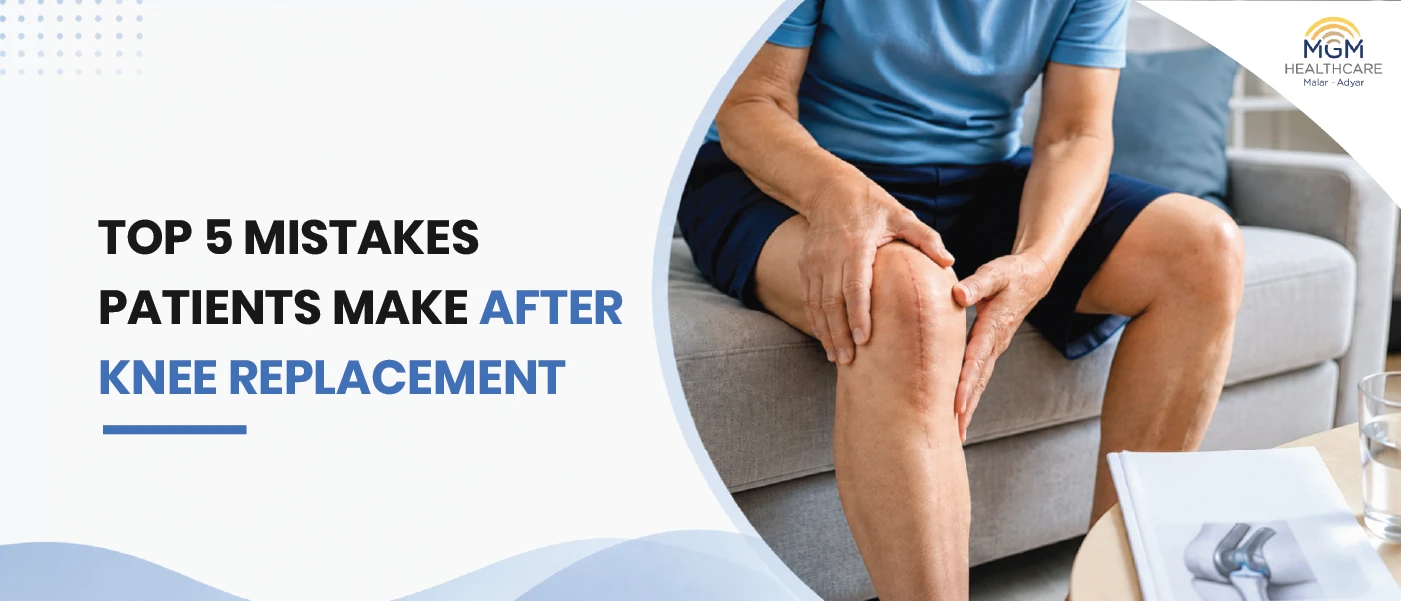
Top 5 Mistakes Patients Make After Knee Replacement
Fast Facts
- Following the advice of your medical team and the rehabilitation method are highly crucial for the recovery process after knee replacement.
- Over-activity too early can cause irritation and pain.
- Total immobility might cause stiffness and a slow recovery.
- Medications, wound care, physical activity, and follow-up visits are crucial aspects of recovery.
- Do not ignore increasing pain, fever, drainage from the wound, or significant swelling.
- Sudden chest pain or trouble breathing should be treated as a medical emergency.
Introduction
Knee replacement can significantly improve mobility and overall quality of life, but the treatment is only part of the rehabilitation process.
What you do after surgery can influence the amount of your recovery in terms of mobility and strength.
So here are five common mistakes patients should avoid throughout recovery.
What are the five top mistakes?
1. Overdoing It Too Soon
Feeling better doesn’t mean your knee is totally healed.
Increasing walking or stair climbing, exercise, or household chores too quickly can aggravate the discomfort and irritation.
Listen to your surgeon’s advice and gradually increase your level of exercise.
2. Avoiding Physical Activity Completely
In contrast, avoiding movement because of fear of pain might result in stiffness and weakness.
The aim of your physiotherapy program is to help you safely get back your mobility and strength.
3. Ignoring Pain and Swelling
Mild soreness and inflammation are expected during the healing process.
However, increasing discomfort, significant swelling, erythema, exudate from the lesion, or pyrexia should not be dismissed as part of the healing process.
4. Ignoring physiotherapy
Rehabilitation plays an important role in recovering after a knee replacement.
Your physiotherapist can help you with exercises to improve the following:
- Knee movement
- Muscle strength
- Balance
- Walking ability
- Functional mobility
5. Go Back to High-Impact Activities Too Soon
Avoid activities that include running, jumping, or other high-impact exercise during the first phase of recovery.
Ask your orthopedic specialists when it is safe for you to return to certain activities.
When to See a Doctor
Visit the Doctor if you have,
- Pain in the knee that is getting worse or very bad
- Worsening swelling
- Redness or warmth around the lesion
- Wound Discharge
- Increased body temperature
- Discomfort or swelling in the calf area
- Trouble with weight-bearing activities.
What are you able to do?
- Follow the rehabilitation plan
- Take prescribed medications as instructed.
- Attend follow-up consultations as scheduled.
- Gradually increase engagement
- Use walking aid equipment as directed.
- Maintain cleanliness of the surgical incision and stick to wound-care standards.
- Maintain a nutritious diet and adequate fluids.
- Ask us before you resume rigorous activities.
Expert Insights
Knee replacement is not the end of therapy; it is the beginning of recovery. Patients often thrive in their recovery when they get the balance between appropriate exercise and adequate rest and follow the advice of their surgeon and physiotherapist.
Keypoints
- Avoid excessive activity following surgery.
- Don’t stop physical exercise completely.
- Follow your physiotherapy program.
- Evidence of damage or systemic signs.
- Resume rigorous activities only with the consent of your health care specialists.
Medically Reviewed by
Dr. Anand M

9+ Years of Experience
MBBS, MCh, MS Senior Consultant Orthopaedics
MGM Malar Hospital, Chennai.
Rehabilitation after knee arthroplasty?
MGM Healthcare’s specialists in orthopedics and rehabilitation will aid you in recovering after surgery and getting back on your feet safely.
Reach us today to book an appointment.
Frequently Asked Questions
Recovery is a process, and it is different for everybody. Recovery can be influenced by your age, general health, muscle strength, surgery, and therapy.
Light soreness and inflammation is to be expected, especially in the early phase of recovery. You need to talk to the medical providers about discomfort that becomes worse or acute.
Ambulation is usually an important part of the rehabilitation process, but the timing and amount should be based on the recommendations from your surgeon and physiotherapist.
Call your medical team if you experience increased pain, increased swelling, wound drainage, fever, calf pain or swelling, or any other alarming symptoms.


