


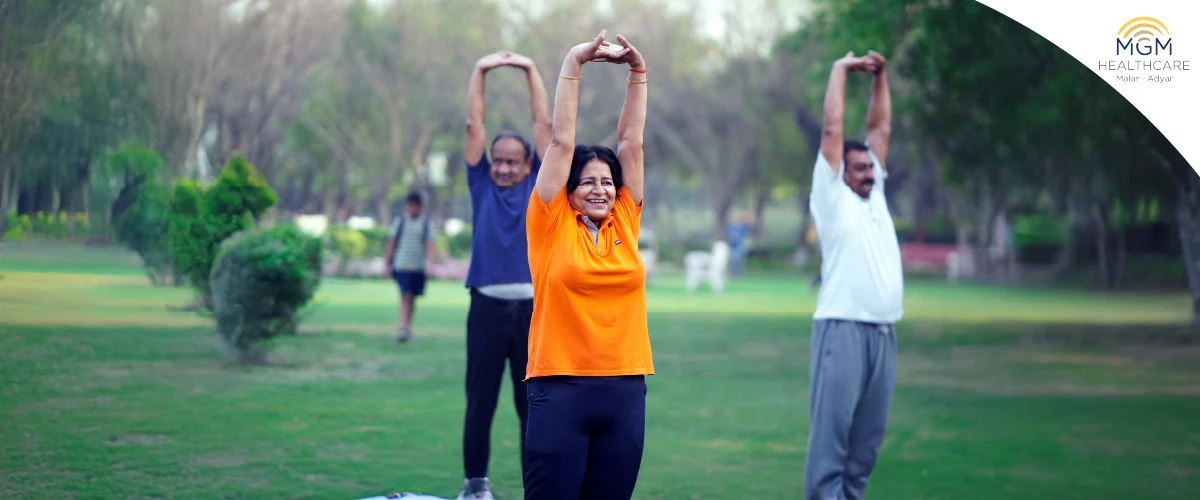
Best Exercises for Seniors at Home After 60 to Stay Active & Strong
Looking for the best exercises for seniors at home after 60?
Simple daily movements can help you stay strong, improve balance, and prevent falls without needing a gym.
Staying active after 60 is possible with safe, easy exercises that support strength, mobility, and independence. Whether you’re just getting started or maintaining your routine, every step counts.
These exercises are commonly recommended by geriatric care specialists to support safe and effective aging.
Quick Answer:
The best exercises for seniors at home include walking, chair squats, light strength training, balance exercises, and stretching. Aim for 30 minutes of activity most days.
Table of Contents
- Why Mobility Matters in Old Age
- The Benefits of Physical Activity for Seniors
- The Best Exercises for Older Adults
- Tips for Staying Active as You Age
- What to Do If You’re Nervous to Begin
- Final Thoughts
Why Mobility Matters in Old Age
Mobility isn’t just about walking. It’s about freedom to meet friends, enjoy your hobbies, and take care of yourself while learning how to stay active in old age.
As we age, challenges like joint stiffness, balance problems, or muscle loss can slow us down. But slowing down doesn’t mean stopping. With the right approach, an exercise workout for seniors helps you adapt and stay mobile.
For expert support and guidance, Geriatric Care Doctor can help you manage these changes and maintain your independence with tailored care plans and mobility-focused therapies.
Common Causes of Reduced Mobility:
- Stiff joints (often due to arthritis)
- Muscle loss (sarcopenia)
- Neurological conditions like Parkinson’s or after a stroke
- Sedentary lifestyle or long periods of inactivity
- Balance and coordination problems
Even small daily movements make a big difference for both your body and your mind.
The Benefits of Physical Activity for Seniors
Immediate Benefits:
- Better sleep
- Reduced anxiety
- Lower blood pressure
Long-Term Advantages:
- Brain health: Lowers the risk of depression and dementia
- Heart health: Helps prevent heart disease, diabetes, and stroke
- Cancer prevention: Reduces the risk of some cancers
- Weight control: Helps prevent unwanted weight gain or loss
- Independence: Maintains strength for daily tasks
- Balance and bone health: Helps prevent falls and injuries
To learn more about how our specialized care supports healthy aging, visit our Geriatric Care page.
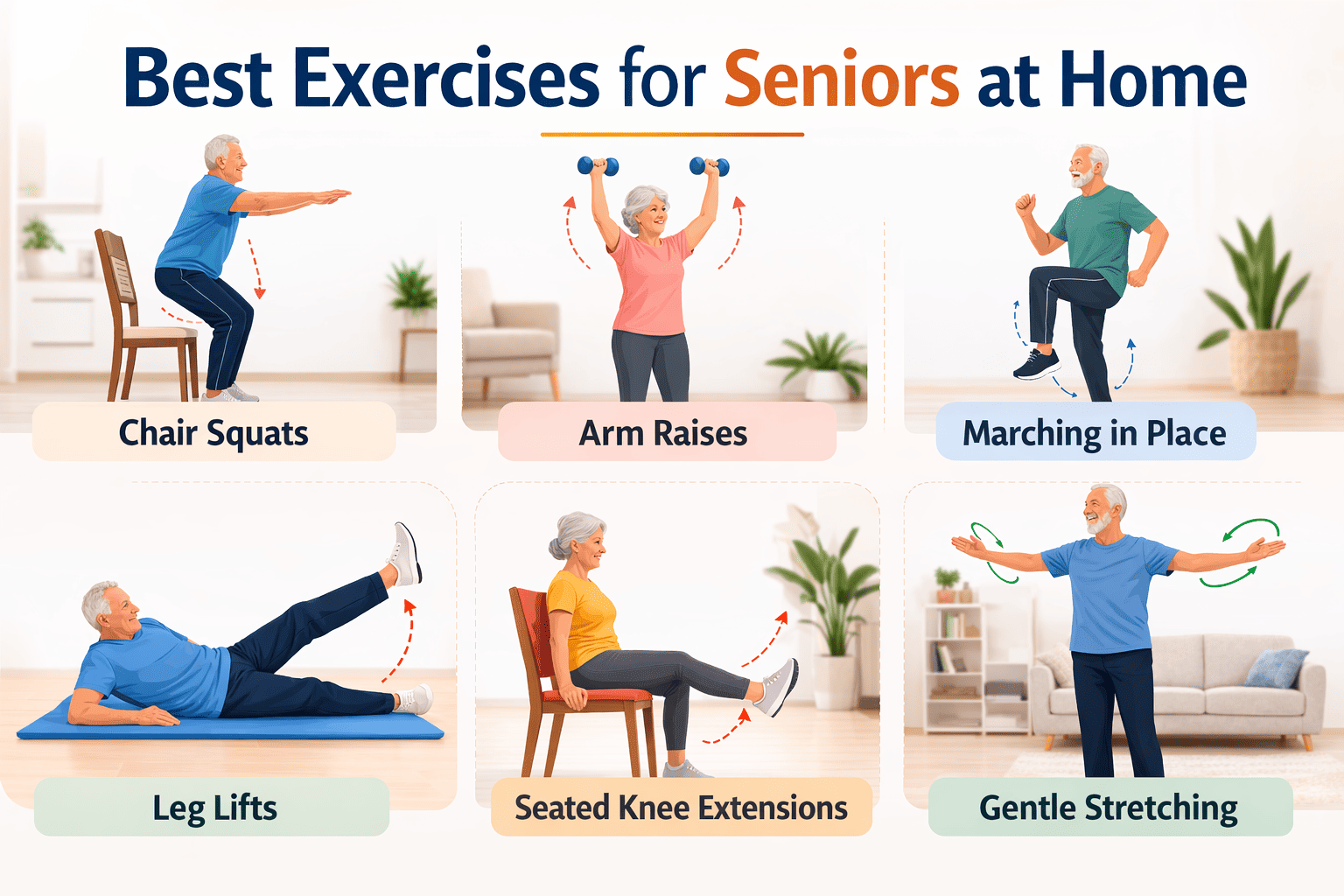
Best Exercises for Seniors at Home
A balanced fitness routine includes cardio, strength, balance, and flexibility, making mobility exercises for elderly and exercises for seniors at home effective without a gym just a little space, time, and consistency.
Cardio (Heart Health)
Examples: Walking, swimming, dancing, or cycling
Goal: Around 30 minutes a day, five times a week or as much as feels right for you.
Strength Training
Examples: Resistance bands, light weights, chair exercises
Goal: Aim for twice a week to help preserve muscle strength.
Balance Exercises
Examples: Tai Chi, heel-to-toe walk, standing on one foot with support
Goal: 3 times a week to reduce fall risk
Flexibility and Stretching
Examples: Seated stretches, yoga, shoulder rolls, neck stretches
Goal: 3 or more times a week for ease of movement
Tips on How to Stay Active in Old Age
- Prioritize safety: Consult your doctor before beginning any new exercise routine
- Begin with small steps: Just 5 to 10 minutes daily can have a positive impact.
- Use assistive tools: Walkers, canes, or handrails are helpful, not a setback.
- Dress comfortably: Wear loose clothes and supportive shoes.
- Stay hydrated: Especially when indoors or in hot weather.
- Have fun: Choose activities you enjoy to keep things sustainable.
Always consult a doctor or geriatric specialist before starting a new exercise routine, especially if you have existing health conditions.
What to Do If You’re Nervous to Begin
Feeling anxious is completely normal, especially if you’ve had a fall, health scare, or haven’t tried exercises for seniors at home in a while. You’re not alone.
Try one of these gentle ways to get started:
- Join a physical therapy session for guided movement
- Attend a senior-friendly class in your community
- Try a home workout plan specifically created for seniors.
Remember, every small step leads to better strength and confidence.
Final Thoughts
Staying active in your later years isn’t about being perfect. It’s about staying strong in your own way.
Whether it’s stretching in the morning, dancing with your grandkids, or going for a short walk with a friend, exercises for seniors at home show how movement adds life to your years. It’s never too late to start.
If you need guidance, a geriatric care team can help you design a plan tailored to your needs, lifestyle, and goals.
Need help getting started?
Our geriatric care experts in Adyar can help you create a safe, effective, and personalized plan to stay fit and independent.
Call us today at 099625 99933
We’re here to support your journey toward strength, confidence, and lifelong movement.
Frequently Asked Questions (FAQs)
The best exercises for seniors at home include walking, chair squats, light strength training, balance exercises like heel to toe walking, and gentle stretching. These activities improve mobility, maintain muscle strength, and reduce fall risk without needing special equipment.
Seniors should aim for at least 30 minutes of moderate activity on most days of the week. Strength exercises can be done two to three times weekly, while balance and flexibility exercises should be practiced at least three times a week for best results.
Yes, it is safe to start exercising at 70 or older, especially with low impact activities tailored to your health condition. Begin slowly, choose simple movements, and consult a doctor or geriatric specialist before starting a new routine.
Yes, mobility exercises improve joint flexibility, balance, coordination, and posture. Regular practice reduces stiffness, lowers fall risk, and supports independence in daily activities such as walking, climbing stairs, and getting up from a chair.
Yes, seniors can build strength using body weight exercises, resistance bands, or light weights at home. Consistent strength training helps prevent muscle loss, improves balance, and supports daily functional activities.


