


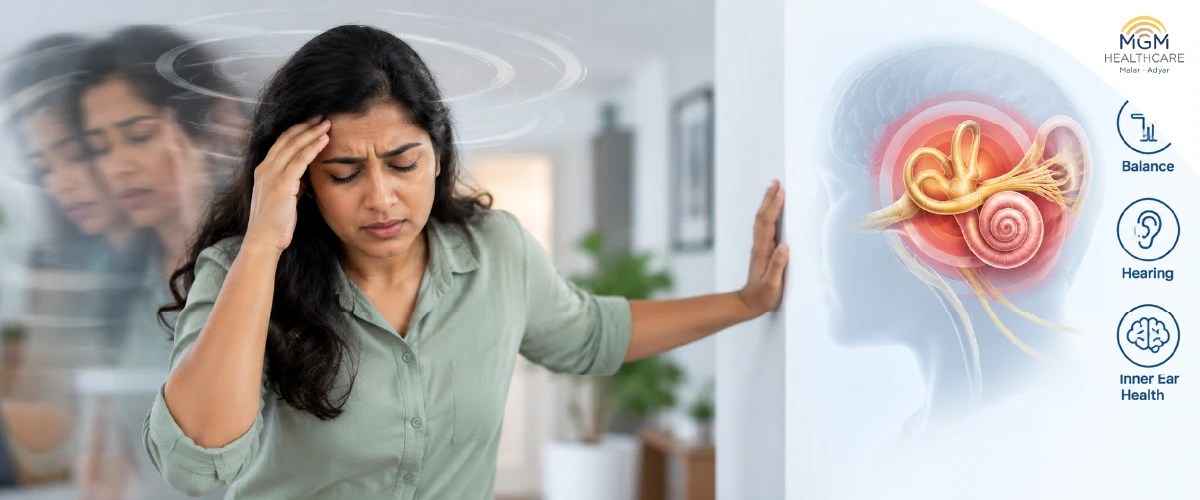
Vertigo or Dizziness? How Your Inner Ear Could Be Involved
Fast Facts
- Vertigo is a spinning feeling, dizziness is a feeling of light headedness or imbalance.
- Your inner ear helps keep you balanced and move your body.
- Vertigo can be caused by BPPV, labyrinthitis and Meniere’s illness.
- Some inner ear diseases can lead to ringing in the ears, alterations in hearing, or a feeling of fullness in the ear.
- Talk to your health care provider if you suddenly or persistently feel dizzy.
Introduction
Ever get that room-spinning sensation while you’re just standing there?
It might be vertigo, a sort of dizziness that can be related to problems with the inner ear. You have a balance mechanism in your ear that notifies the brain about movement and position. If these impulses are interrupted, you may feel dizzy or unbalanced.
Knowing the likely signs can help you know when to seek medical treatment.
How the Inner Ear Causes Dizziness?
Your inner ear contains the vestibular system, which helps your brain sense head movement and retain your balance. When this system becomes injured it might lead to vertigo, dizziness or problems with balance.
Common Inner Ear Causes of Vertigo (BPPV)
Benign Paroxysmal Positional Vertigo (BPPV) When little crystals in the inner ear are displaced.
You can have vertigo when:
- Turn your head.
- Get out of the bed
- Go to sleep
- Up/down navigation
- Inner Ear Infections
Inflammation of the inner ear occasionally after an infection can cause:
- Dizziness
- Difference
- Feeling sick
- Changes in hearing
Meniere’s Disease
This inner ear disorder can produce bouts of:
- Dizziness
- Ringing in the ears
- Changes in hearing
- Pressure or fullness in the ears
Vertigo vs. Dizziness
Vertigo: Feeling that you or your surroundings are spinning.
Dizziness is the feeling of being dizzy, light-headed or unsteady.
Both can have several causes, therefore you need a full examination.
When to visit your doctor?
If you have: get medical treatment
- Recurrent or constant vertigo.
- Balance problems that affect activities of daily living.
- New alterations in hearing or ringing in the ear.
- Intermittent dizziness.
Your doctor can prescribe hearing or balance tests to find out what’s wrong.
Is dizziness an emergency room?
Seek medical treatment immediately if any of the following significant side effects occur:
- Numbness and weakness
- Trouble speaking
- Severe headache.
- Loss of awareness
- Sudden alterations in vision.
- Serious walking problems.
Any of these signs may be warning that you have some sickness that needs urgent care.
What Can You Do?
If you feel dizzy:
- Rest or lie down until symptoms resolve.
- Move places slowly.
- Do not drive if you feel dizzy.
- Monitor what provokes your symptoms.
- Do not self-medicate.
- If the symptoms continue or return, get medical help.
Expert Insights
Vertigo doesn’t necessarily come from the inner ear, but if you have balance issues with changes in hearing, ringing or a feeling of pressure in the ears, you may need to see an ENT.
Key Points
- Inner ear helps us balance.
- Vertigo causes: BPPV, labyrinthitis, Ménière’s illness.
- Some inner ear issues can cause ringing and alterations in hearing.
- Do not overlook dizziness that recurs or persists.
- Sudden onset dizziness with neurologic signs is an emergency.
About the Reviewer
Make an Appointment
Do you suffer from recurrent dizziness, spinning or loss of balance?
Don’t disregard recurring symptoms. An ENT professional can help you discover the problem and offer the proper therapy.
Schedule an appointment with MGM Healthcare.
Frequently Asked Questions
Yes, instability of the balance system of the inner ear can produce dizziness or vertigo.
Yes . BPPV is the most prevalent cause of short bouts of spinning with head movements.
Certain infections may involve the inner ear and lead to vertigo and balance problems.
Seek medical help if you have frequent or ongoing dizziness or dizziness that’s affecting your daily activities.
Sudden vertigo, weakness, trouble speaking, severe headache, fainting, change in eyesight. Get urgent medical assistance.
Contact Us
Appointments
Emergency
MGM - Malar Adyar
Old No. 52 New No. 111, 1 st Main Road, Gandhi Nagar, Adyar, Chennai – 600020


At MGM Malar - Adyar Hospital, our philosophy centers on alleviating the apprehension associated with illness. Recognizing that confronting health challenges entails both physical and emotional struggles, our devoted team is steadfast in delivering outstanding healthcare to enhance your overall wellness and alleviate the stress that accompanies medical conditions. Situated in the heart of the city with a 141-bed facility, we are dedicated to supporting you throughout your healthcare journey.
© 2026 MGM Malar - Adyar. All Rights Reserved.