


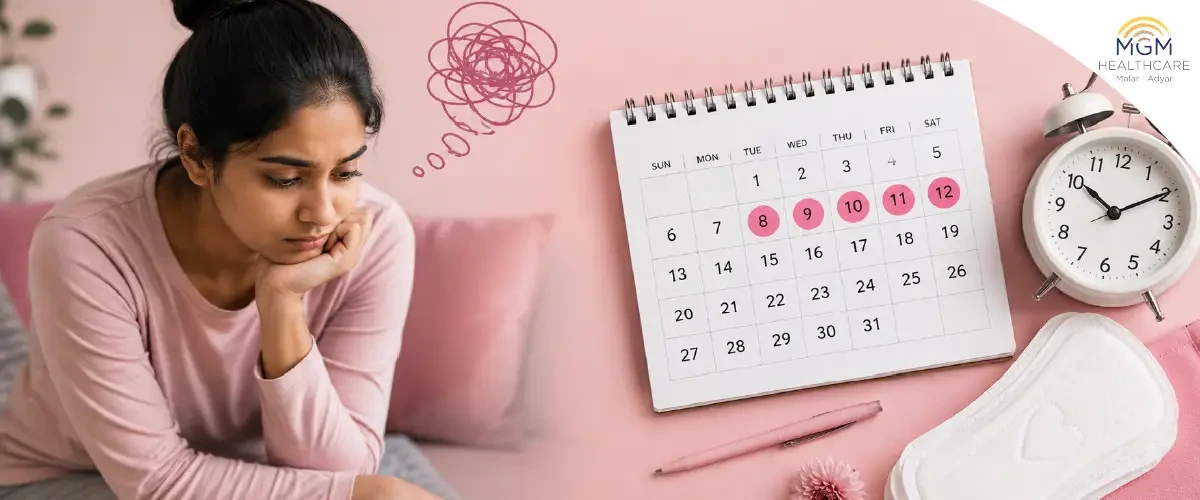
Why Do So Many Women Ignore Irregular Periods?
Fast Facts
- Menstrual cycles can be erratic but do not disregard really irregular periods.
- Stress, weight gain or loss, thyroid issues, polycystic ovarian syndrome (PCOS), pregnancy, and other medical disorders might affect menstrual periods.
- See a healthcare provider if you have heavy bleeding, lengthy lengths of time, or frequent missing periods.
- You might be able to recognize changes by monitoring your cycle.
- Sometimes overall health and fertility might be impacted by abnormalities in periods.
- If you have heavy bleeding and feel lightheaded, dizzy, or very weak, see a doctor right away.
Introduction
Sometimes your period may come early or late or not come at all for a few months.
Many women shrug off irregular periods as stress, a demanding schedule, or lifestyle choices. But don’t dismiss changes that continue to occur throughout your menstrual cycle.
Your menstrual cycle is an essential marker of your general and reproductive health.
What Makes Periods Irregular?
Polycystic ovarian syndrome (PCOS) can also interfere with ovulation and produce irregular or infrequent periods.
It may be related to acne, extra hair on the face or body, trouble maintaining a normal weight, or infertility.
Stress
Stress, whether it’s chronic or extreme, can interfere with the hormones that regulate menstruation and ovulation.
Weight Differences
The menstrual cycle can be affected by quick weight loss, large weight gain, or very low body weight.
Thyroid conditions
Thyroid disorders can throw menstrual cycles and reproductive hormones out of sync.
Pregnancy
One of the first signs of pregnancy may be a missed menstruation.
Perimenopause
As women get closer to menopause, their periods might become less predictable.
Who is most likely to have irregular periods?
More likely to have irregular cycles if you:
- Have polycystic ovarian syndrome
- Increased stress
- Drastic change in weight
- Thyroid imbalance
- Overtraining
- Are approaching menopause
- Are under certain medications
When to Call a Doctor?
Visit a gynecologist if you have the following:
- Often unpredictable work hours
- When a random incident happens out of the blue
- Missed periods from time to time
- Excessive bleeding
- Bleeding or spotting between periods
- Bleeding after intercourse
- Painful or difficult periods
- Problems becoming pregnant
When is heavy bleeding an emergency?
If you have any of the following, get emergency medical help right away:
- Loss of consciousness
- Feeling dizzy
- Significant weakness
- Breathing troubles
- Intense stomach or pelvic discomfort
- Possible pregnancy
What Can You Do?
- Track the beginning and ending dates of each period.
- Report significant or persistent bleeding.
- Search for any signs of discomfort.
- Eat a well-balanced diet and maintain a healthy lifestyle.
- Manage your stress
- Unexpected cycles should not be disregarded.
- See a gynecologist if you detect any persistent changes.
Expert Insights
An irregular period is not necessarily a cause for concern, but if there is a shift in your normal menstrual cycle that carries on for a length of time, it should be taken seriously. Understanding what is truly happening might help you feel less uncomfortable and preserve your reproductive and long-term health if required.
Keypoints
- Irregular menstruation has numerous reasons.
- PCOS, thyroid issues, stress, weight changes, pregnancy, and perimenopause can all affect the cycle.
- See persistent irregularities.
- If you track your cycle, your doctor can look for patterns.
- Severe bleeding and bleeding-related symptoms need to be treated as quickly as possible.
Medically Reviewed by

9+ Years of Experience
MBBS, MS (Obstetrics & Gynaecology) Consultant Obstetrics and Gynaecology
MGM Malar Hospital, Chennai.
Are your periods becoming unpredictable?
Don’t just flow with the monthlong menstrual cycle. At MGM Malar – Adyar, our physicians can assess the irregular periods and identify the underlying reproductive, hormonal, or other concerns.
Call now to make an appointment.
Frequently Asked Questions
Everyone’s cycle patterns differ, but if you detect a major or persistent shift from your normal pattern, you should check with a healthcare practitioner.
Yes. Extreme stress can affect hormone signals that control ovulation and menstruation.
Yes. PCOS can cause irregular or infrequent periods since you may not be ovulating on a regular basis.
If you have a lot of discomfort, irregular periods that occur often, excessive bleeding, bleeding between periods, or issues with reproduction, contact a gynecologist.


