


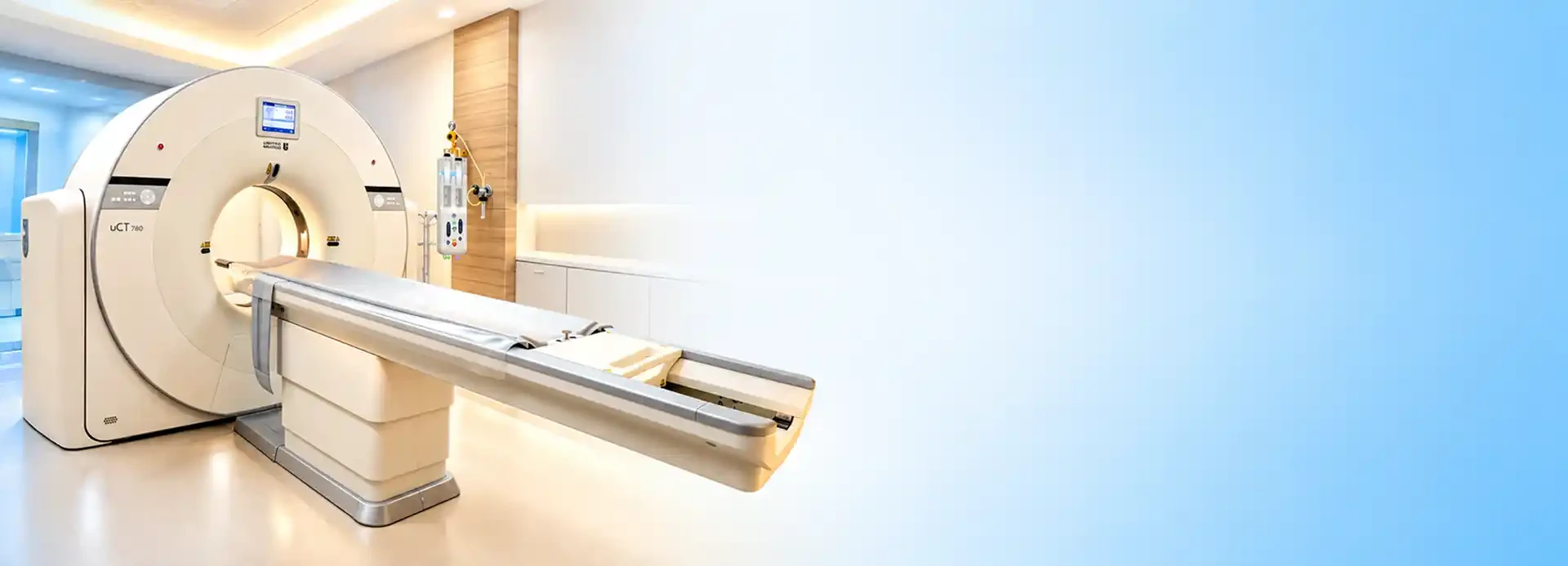
Advanced Imaging and Precision Diagnostics Services at MGM Malar
At MGM Malar, advanced imaging technologies are used to support precise diagnosis and assessment of lung and cardiovascular conditions, with a focus on clinically appropriate, patient-centred imaging.
Advanced imaging at MGM Healthcare Malar, Adyar, combines advanced CT protocols, low-dose imaging, deep-learning-based image reconstruction and quantitative imaging to support the evaluation of lung and cardiovascular conditions. These technologies provide detailed and clinically useful imaging information while helping optimise radiation and contrast exposure where appropriate.
The hospital’s imaging services include ultra-low-dose CT chest and low-dose CT coronary angiography, supporting the assessment of lung abnormalities and coronary artery conditions. The appropriate imaging protocol is selected based on the patient’s clinical requirements, medical history and diagnostic needs.
Deep-learning-based image reconstruction is incorporated into selected CT imaging workflows at MGM Malar. This technology can support the generation of diagnostically useful images from lower-dose acquisitions, while quantitative imaging techniques can provide measurable information to assist radiologists in evaluating imaging findings.
By combining advanced imaging technology with radiological expertise, MGM Malar aims to support earlier detection, precise assessment and appropriately optimised diagnostic examinations. AI-assisted tools support image reconstruction and analysis while the final clinical interpretation remains guided by the expertise and judgement of the radiologist.
Clinical Experience
As part of its ongoing imaging programme, MGM Healthcare Malar, Adyar has performed:
- 133 coronary CT examinations were performed with minimal voulme of contrast.
- 260 patients screened through its ultra-low-dose chest CT programme. Of these, 179 subsequently underwent biopsy based on imaging findings, with 54 cancers identified in the screened cohort.
These results reflect the hospital’s focus on applying advanced imaging technologies and optimised clinical protocols to support earlier and more accurate diagnosis.


Conditions and Diagnostic Applications
Lung Abnormalities
Suspected Lung Cancer
Pulmonary Conditions
Coronary Artery Disease (CAD)
Coronary Artery Abnormalities
Cardiovascular Conditions
Heart and Coronary Artery Assessment
Lung Findings Requiring Further Evaluation
Quantitative Imaging Assessment
Advanced Imaging Services


Ultra-Low-Dose CT Chest
Low-Dose CT Coronary Angiography
Deep-Learning-Based Image Reconstruction
AI-Assisted Medical Imaging
Quantitative Imaging Analysis
![Beds]()
160+
Beds
![Doctors]()
150+
Doctors
![Years of service the community]()
30+
Years of service the community
![Specialities]()
30+
Specialities
![Emergency Care]()
24x7
Emergency Care


Frequently Asked Questions
Advanced imaging uses modern CT and AI-assisted technologies to provide detailed diagnostic information, helping doctors detect, assess and monitor various health conditions.
Ultra-low-dose CT chest uses optimised scanning techniques to assess lung abnormalities while reducing radiation exposure, when clinically appropriate for the patient.
CT coronary angiography is a non-invasive imaging test that provides detailed images of the coronary arteries to help doctors assess certain heart conditions.
Low-dose CT is designed to minimise radiation exposure while maintaining clinically useful images. Your doctor will recommend it when the examination is appropriate.
No. AI supports image reconstruction and analysis, while the radiologist interprets the findings along with your symptoms, medical history and other clinical information.


