


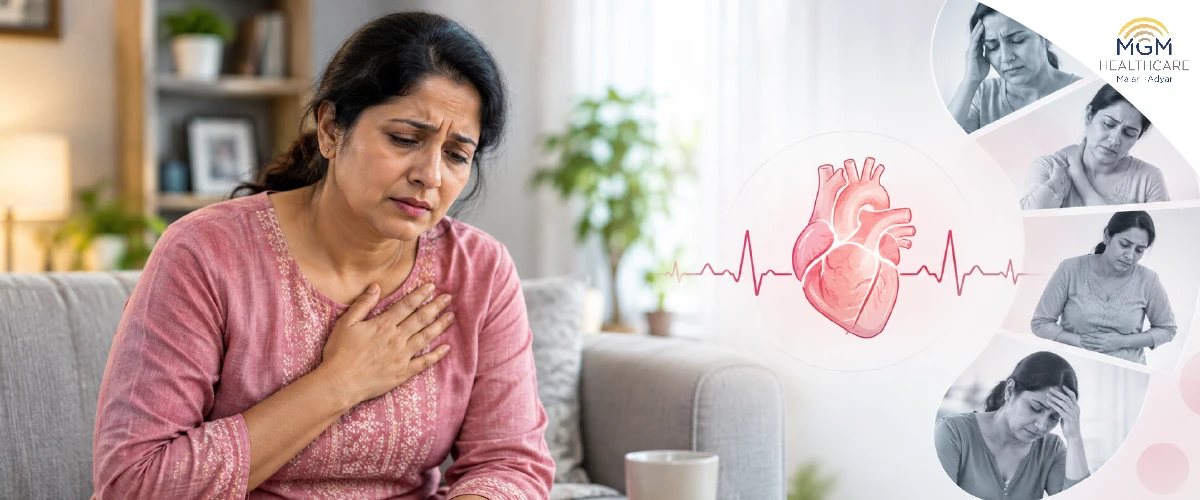
Heart Attack Symptoms in Women: Why They Can Look Different
Fast facts
- Women can have heart attack symptoms without the classic severe chest pain.
- Warning signs can also include breathlessness, unusual tiredness, nausea, sweating or back and jaw pain.
- Symptoms are similar to acidity, stress, or exhaustion.
- Don’t ignore unexpected or unexplained symptoms.
- Early medical treatment may limit damage to the heart.
Introduction
Women don’t have the same symptoms of heart attacks. Most women experience discomfort in the chest, but other women may have other symptoms such as unusual tiredness, shortness of breath, nausea, dizziness, or pain in the back, neck, jaw, or arms.
These symptoms can be similar to common health problems and it can be easy to ignore them. Knowing the warning signs can help you get care sooner. Why Do Women Have Different Symptoms of a Heart Attack Than Men?
Women can have classic heart attack symptoms, but others may present with less obvious symptoms.
These might include:
- Tightness or pressure in the chest
- Difficulty breathing
- Unexplained tiredness/weakness
- Nausea and vomiting
- cold sweat
- Dizziness or lightheadedness
- Pain in the back, neck, jaw, shoulder or arm
- Stomach upset or indigestion# Symptoms Women May Mistake For Other Things
Pathological Fatigue
Don’t just put sudden or unusual tiredness down to being overworked, particularly if it’s accompanied by breathlessness or weakness.
Difficulty breathing
Shortness of breath may or may not be accompanied by chest pain. Get medical help if you have sudden or unexplained difficulty breathing.
Feeling Sick or Indigestion
Sometimes during a heart attack, nausea, vomiting or stomach discomfort can happen and can be misread as acidity or indigestion.
Neck, Back or Jaw Pain
Pain from the heart can radiate from the chest to the back, neck, jaw, shoulders or arms.
Dizziness or Sweating
Other heart attack symptoms can include sudden dizziness, lightheadedness, or cold sweats.
How Do You Tell The Difference?
Symptoms may look like other diseases and cannot be used by themselves to diagnose a heart attack.
Look for symptoms that are:
- Unusual or new
- Acute or chronic
- Along with other warning signs
- No relief with rest
When in doubt, get a medical evaluation.
Who is at greatest risk?
You may be at increased risk if you:
- Have high blood pressure, cholesterol, or diabetes.
- Tobacco smoking or use
- Be obese or physically inactive
- Family history of heart disease
- Are older or post-menopausal
- Have certain risk factors that affect pregnancy
When to Go to the ER
If you have: Seek emergency medical help
- Chest pain, pressure or discomfort
- Sudden or severe shortness of breath
- Cold sweat with weakness or nausea
- Passing out or severe dizziness
- Pain may radiate to the arm, jaw, back, neck or shoulder
- A number of these symptoms together
Don’t wait until the symptoms are serious.
So what can you do?
If you think you are having a heart attack:
- Stop what you are doing and rest.
- Get immediate medical help.
- Don’t ignore or power through the symptoms.
- Don’t drive yourself to the hospital if emergency transport is available.
- Follow your doctor’s advice regarding heart health and risk factors.
Experts Insights:
Women can sometimes have mild symptoms of a heart attack. Other warning signs may be fatigue, shortness of breath, nausea, sweating or pain in other parts of the body that are not normal for you.
Key Points:
- Women don’t always have really bad chest pain when they have a heart attack.
- Symptoms include shortness of breath, nausea, abnormal fatigue and pain in the back and in the jaw.
- Symptoms can be confused with acidity, stress or exhaustion.
- Do not ignore new or unexplained symptoms.
- Call emergency services if you think someone is having a heart attack.
About the Reviewer

30+ Years of Experience
Senior Consultant Interventional Cardiology
MGM Malar Hospital in Adyar, Chennai.
It’s easy to miss the signs of a heart attack in women.
Don’t ignore sudden or unusual symptoms. At MGM Malar, our doctors can evaluate your symptoms and direct you to the appropriate care.
Frequently Asked Questions
You may have chest pain, shortness of breath, unusual tiredness, nausea, sweating, dizziness and pain in your back, jaw, shoulders or arms.
Yes. Some women may experience little or no chest pain, but other signs of warning.
Yeah. You may feel nauseous or have indigestion during a heart attack. New or unexplained symptoms should be evaluated by a doctor.
Seek emergency help for chest discomfort, severe shortness of breath, fainting, cold sweating, or unexplained pain in the arm, jaw, back, neck, or shoulder.


