


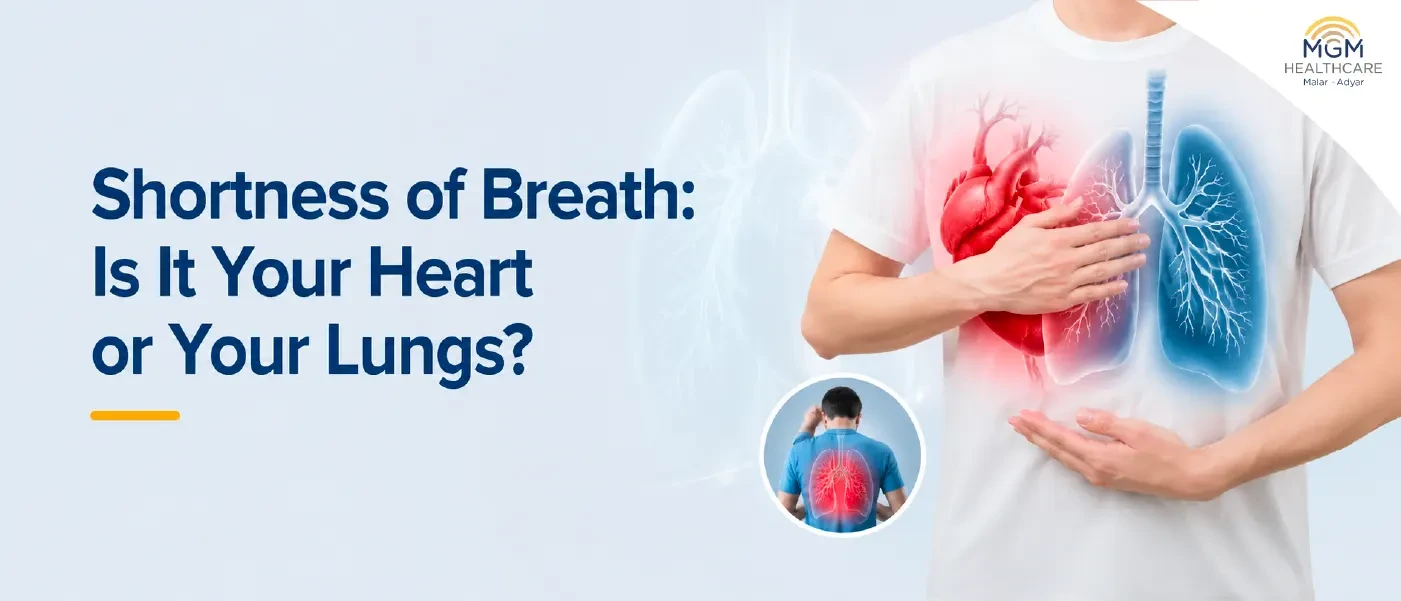
Shortness of Breath: Is It Your Heart or Your Lungs?
Fast facts
- Shortness of breath may be caused by a cardiac or pulmonary disease.
- Do not ignore dyspnea at rest or in routine activity.
- Breathlessness due to heart disorders is often associated with chest pain, edema, or tiredness.
- Lung disorders often cause breathlessness accompanied by a cough, wheezing, or discharge of mucus.
- Early diagnosis avoids serious repercussions and boosts the efficiency of treatment.
Introduction
Shortness of breath when climbing stairs or on exertion is common. But if shortness of breath persists at rest or with typical activity, it may be a sign of a medical concern. Sometimes, heart and lung symptoms can be similar.
Without a medical assessment, it is difficult to identify what is causing them. Early detection of the cause is essential for efficient treatment and prevention of consequences.
Is Shortness of Breath Caused by the Heart or the Lungs?
Together, the heart and lungs oxygenate the entire body. If any of these organs do not work well, you may have difficulty breathing.
Most disorders of the heart decrease the efficiency of the heart in circulating blood, whereas most diseases of the lung hinder the absorption of oxygen into the blood. Since symptoms often overlap, a comprehensive evaluation by a physician should be performed to determine the underlying problem.
When Is Your Heart the Cause?
The heart pumps oxygenated blood throughout the body. If it can’t pump hard enough, fluid may build up in the lungs and cause difficulty breathing.
Commonly associated causes of heart disease are:
- Heart failure
- Coronary Heart Disease
- Diseases of the heart valves
- Arrhythmias (Irregular heart rhythms)
Signs of cardiac dyspnea?
Symptoms may include:
- Shortness of breath during activity
- Difficulty breathing while lying down
- Swelling of feet, ankles or legs
- Chest pain or discomfort
- Palpitations (rapid or irregular heart pulse)
- Fatigue
- Reduced ability to do physical activities
When Are Your Lungs Responsible?
Your lungs. They provide oxygen for your blood. Diseases of the respiratory tract or lung tissue may interfere with the exchange of oxygen and cause difficulty with breathing. Common lung disorders include
- Asthma (Lung disease)
- Chronic obstructive pulmonary disease (COPD)
- Pneumonitis
- Pulmonary Fibrosis
- Respiratory diseases
Lung dyspnea signs
Symptoms may include:
- A persistent cough
- Wheezing
- Excessive mucus production
- Difficulty in breathing with fever
- Breathing problems from allergies
- Breathlessness with respiratory infections
How do doctors find out the cause?
Given the overlap of cardiac and pulmonary disorders, your doctor may advise the following:
- Physical Examination
- X-Ray
- Electrocardiogram (ECG)
- Echocardiogram
- Pulmonary Function Test (PFT)
- Blood test
- CT scan (if required)
These tests assist in identifying the root problem and providing the most suitable solution.
How is shortness of breath treated?
The treatment is dictated by the underlying cause.
Treatment for cardiac problems may include:
- Medications
- Lifestyle changes
- Control blood pressure and cholesterol
- Need for treatment or surgical intervention
Treatment of pulmonary disorders is:
- Inhalers
- Medications
- Oxygen therapy (if needed)
- Pulmonary Rehabilitation
- Treatment of respiratory system infections or chronic diseases
Once diagnosed, the doctor will suggest the best course of treatment.
Keeping Your Heart and Lungs Healthy:
Helpful Tips
A few simple lifestyle changes can make a big difference to your risk:
- No smoking or tobacco products permitted.
- Be active
- Keep a healthy body weight
- Managing diabetes, cholesterol and blood pressure
- Eat a healthy, balanced diet
- Follow recommendations for flu and pneumonia vaccines
- Routine health screening, especially for those over 40 years of age
When to Get Emergency Medical Help
If you have dyspnea and any of the following symptoms, call a doctor immediately:
- Severe chest pain
- Blue lips or fingertips
- Acute shortness of breath
- Fainting
- Confusion
Early action saves lives.
Expert Insight
Dyspnea is a symptom and not a disease. It could be a heart problem, but it could also be a lung problem or any other medical concern. Any dyspnea of an inexplicable or prolonged nature should be evaluated promptly.
Diagnosing early gives a window for prompt intervention, minimizing the likelihood of adverse outcomes and maintaining a better quality of life.
Dr. Pradeep Gopinath Nayar
Senior Consultant
Interventional Cardiologist
Helpful Read:
- How air pollution affects lung health
- Can Lung Problems Affect Your Sleep?
- Morning Cough Every Day? Your Lungs Could Be Asking for Help
Key Takeaways
- Shortness of breath may be due to a cardiac or pulmonary issue.
- Breathlessness due to cardiac issues is usually associated with chest pain, edema, and tiredness.
- Breathlessness due to pulmonary issues is generally accompanied by cough, wheeze, or production of mucus.
- Medical diagnostics will reveal the exact cause of the condition.
- The earlier you get it and intervene, the better the treatment outcome and reduce complications
About Reviewer

40+ Years of Experience
MBBS & DNB (Cardiology), MD (General Medicine) Senior Consultant
MGM Malar Hospital in Adyar, Chennai.
Areas of Expertise:
- Coronary Angioplasty
- Peripheral Angioplasty
- Balloon Valvuloplasty
- Device Closure for Congenital Heart Defects
- Pacemaker Implantation
- Cardiac Resynchronization Therapy (CRT)
- Implantable Cardioverter Defibrillators (ICD)
- Percutaneous Valve Replacement
Feeling short of breath for no apparent reason?
The cardiology team at MGM Healthcare Malar delivers comprehensive appraisals for heart-related problems using sophisticated diagnostic equipment and individualized treatment strategies. Early diagnosis will assist you in protecting your heart and lungs and help you live a better quality of life.
Frequently Asked Questions (FAQs)
Cardiac dyspnea is generally accompanied by thoracic pain, peripheral edema, fatigue, or respiratory distress in the supine position. Lung illnesses are more likely to produce dyspnea, cough, wheeze, production of mucus, or fever. A medical evaluation is required for diagnosis.
Difficulty breathing is a very common symptom of anxiety and panic attacks. However, any significant or recurrent dyspnea should always be explored to rule out cardiac or pulmonary illness.
See a doctor if shortness of breath at rest or on light exercise is getting worse or if you also have chest pain, edema, cough, fever, or palpitations.
Your doctor may order a physical exam, EKG, echocardiography, chest X-ray, lung function tests, blood tests, or CT scan based on your symptoms.
Yes. To help lower your risk for heart and lung disease, get active, don’t smoke, stay at a healthy weight, eat a nutritious diet, and manage health problems such as diabetes and high blood pressure.
Not needed. Seek emergency medical assistance immediately if you develop sudden, severe dyspnea, chest discomfort, cyanosis of the lips, syncope, or confusion.


